Product Team
--------------------------------------------
--------------------------------------------
1 UI Designer
1 UX Designer
2 Industrial Designers
-------------------------------------------
Voice: Curageous, energized, & inspired
Visual Tones: Alive, vibrant, & exude vitality
Project duration: 1 year for the initial Thermal Cycler; Full family line-up using this design system took about 10 years to fully take effect. The full thermal cycler system can be seen in the product family video, below.
Visual Tones: Alive, vibrant, & exude vitality
Project duration: 1 year for the initial Thermal Cycler; Full family line-up using this design system took about 10 years to fully take effect. The full thermal cycler system can be seen in the product family video, below.
Overview
Develop a new design system for Life Technologies’ family of scientific instruments, beginning with the ProFlex™ PCR Thermal Cycler. As a cornerstone tool in molecular biology and forensic science, the ProFlex enables precise temperature control for DNA amplification.
The Challenge
In 2013, Life Technologies's business model was not only to create their own line of innovative scientific instruments, but to also purchase smaller companies whose products they thought would complement the innovation of technology. In doing so, brand disruption became an issue. All of a sudden, their line of products looked very different from one another. In order to launch product in a quick manner, they would use the old instrument designs, and slap their logo on it. This led the company to come up with the idea of creating it's own internal design group, consisting of Industrial Design, UX/UI Design, and User Research, with a goal of creating world class scientific instruments that live in harmony with one another. No pressure, but this first instrument would showcase that good design can upscale performance and profit for the company, moving forward. We either succeed, or fail.
My Approach
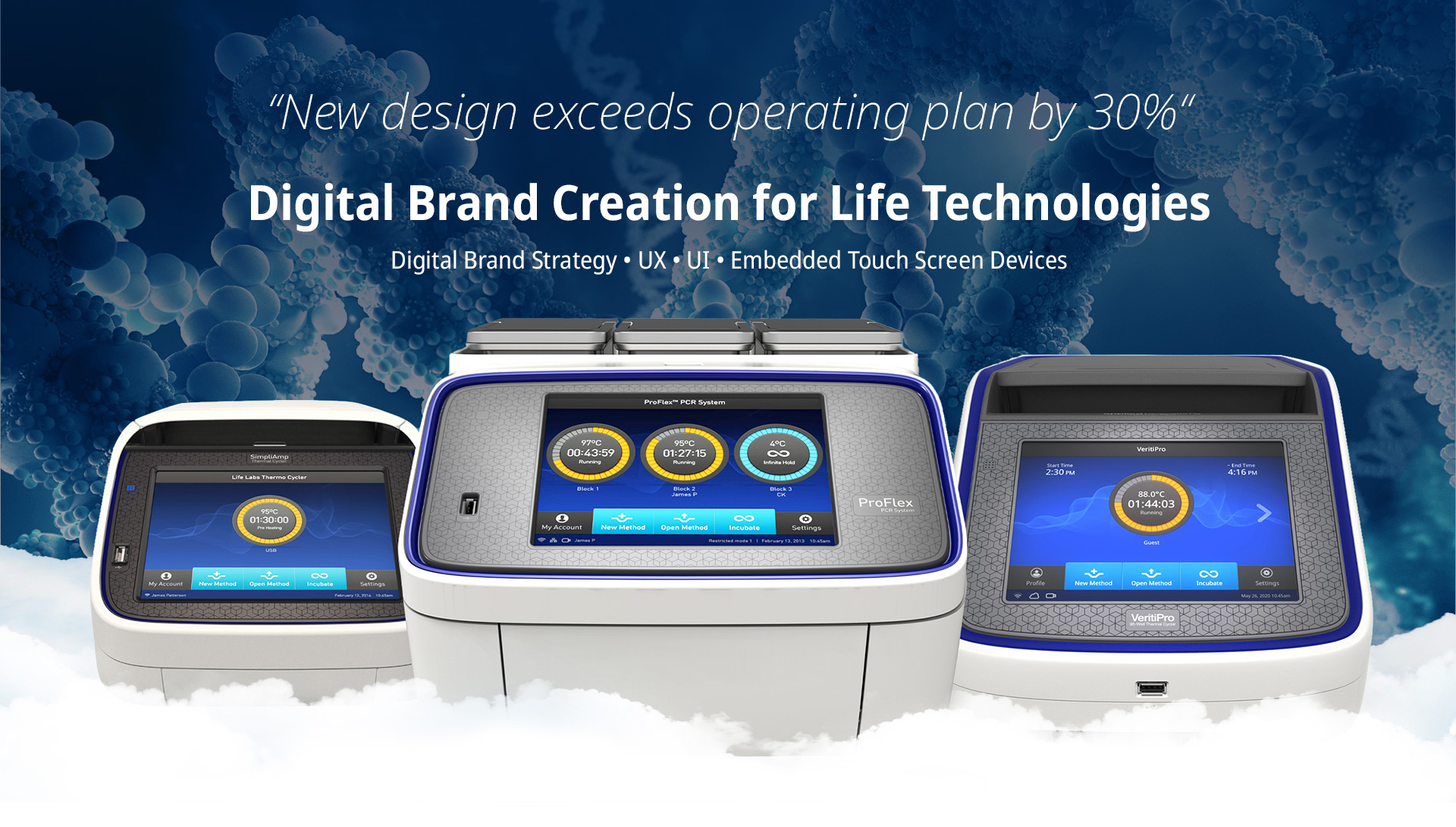
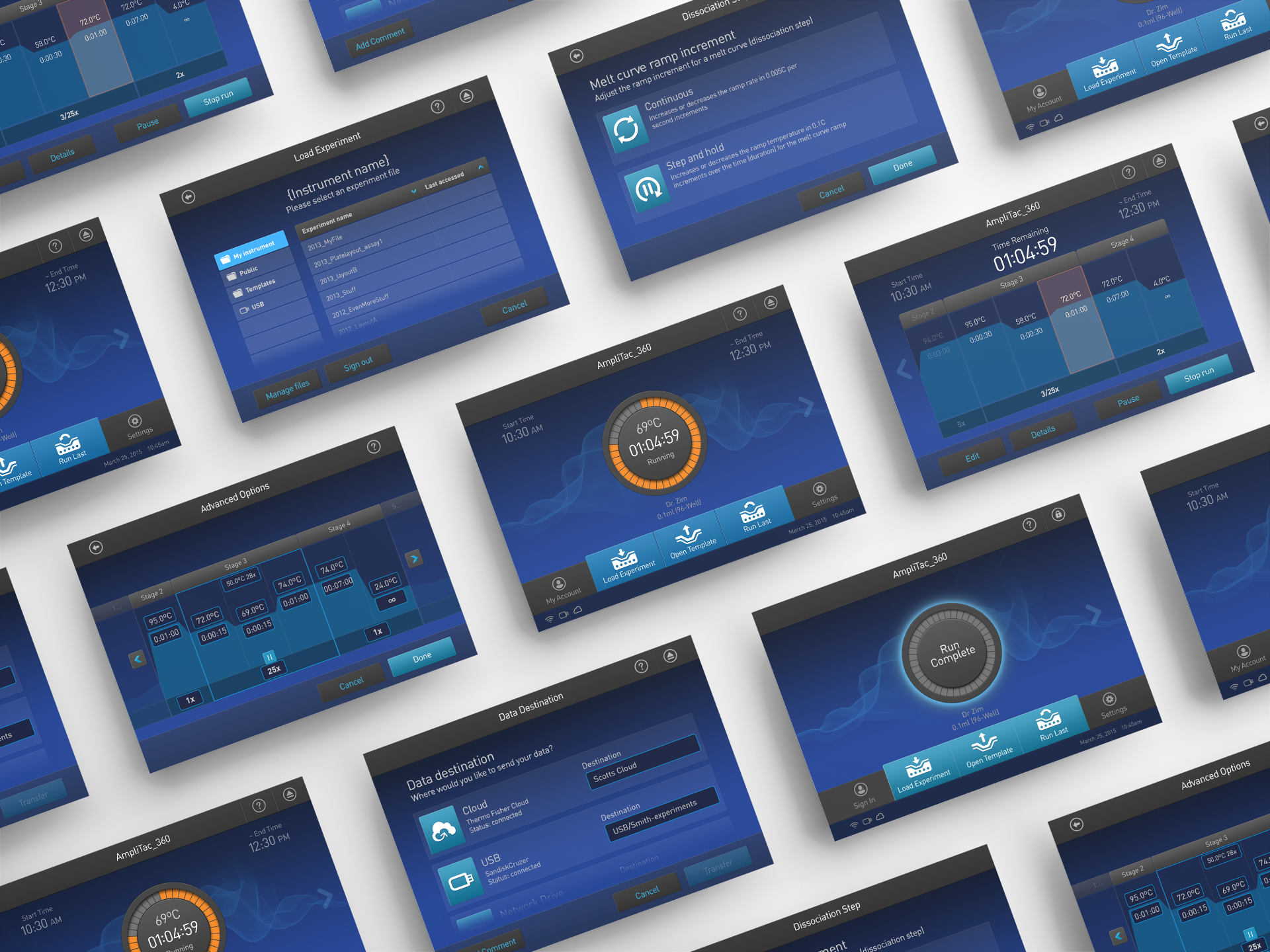
As lead UI designer, my goal was to craft a visual language that felt both iconic and approachable, something that would stand out in the world of scientific instruments while reflecting the precision and trust inherent to the brand. Working side by side with industrial designers and user researchers, we defined the visual and emotional tone of the experience, focusing on how scientists should feel when interacting with our products. Collaborating closely with the UX designer, we reimagined complex workflows through a philosophy of progressive disclosure – where we would reveal information only when needed to keep interfaces clear and intuitive. The first expression of this new design language came to life in the Applied Biosystems' family of PCR Thermal Cyclers.
Creation of an Iconic Trait
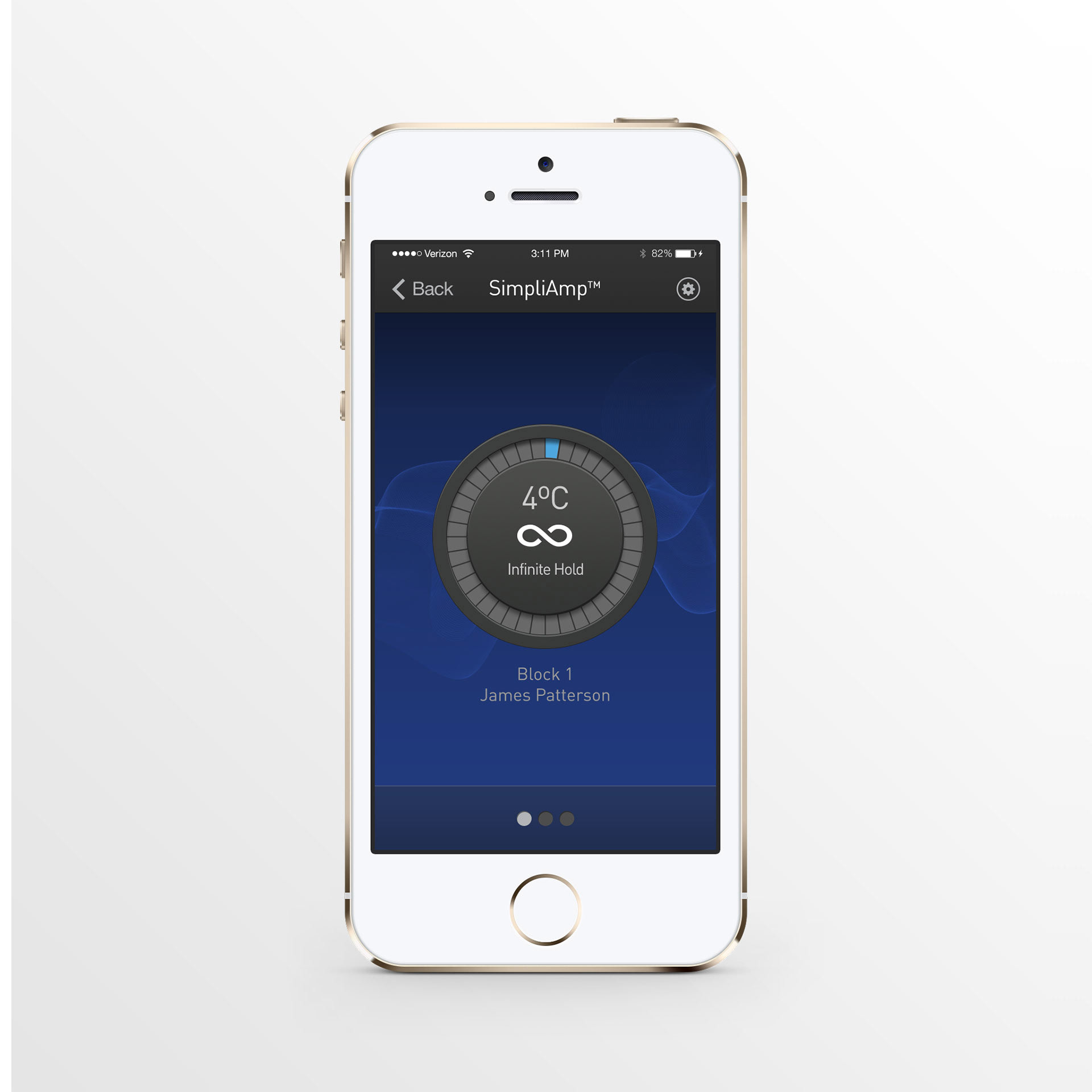
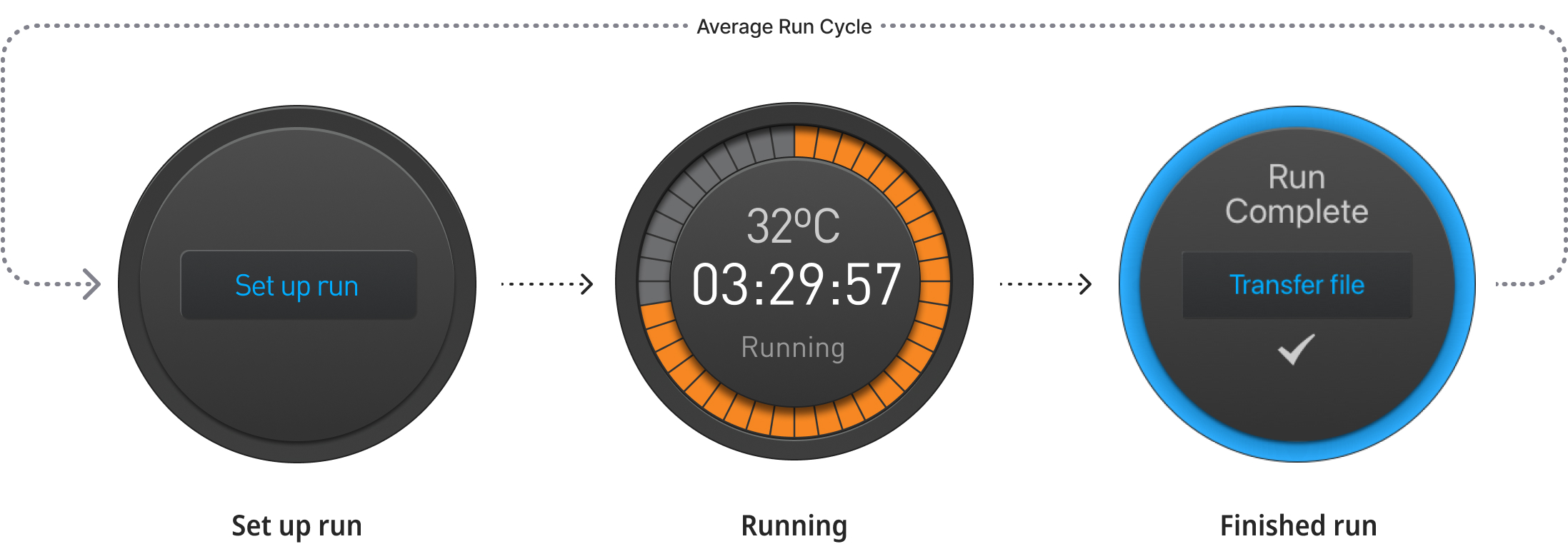
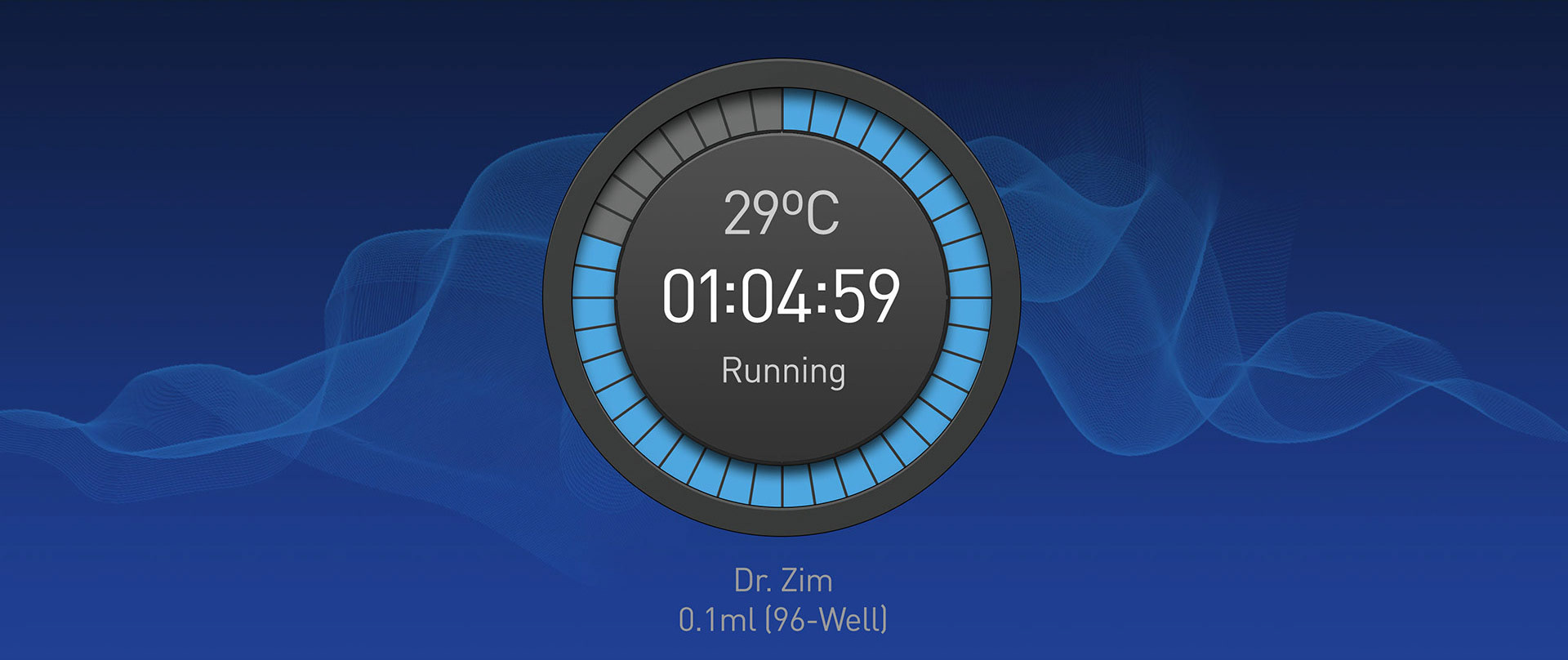
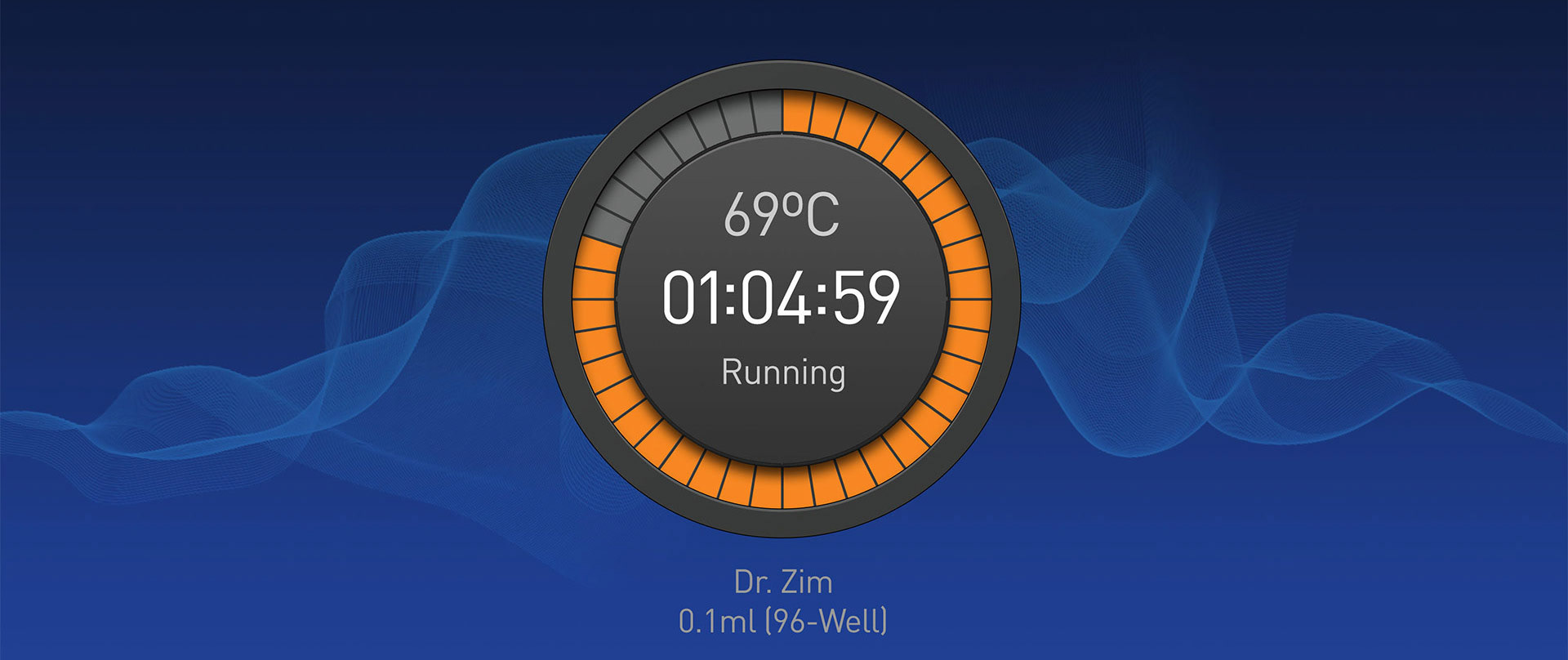
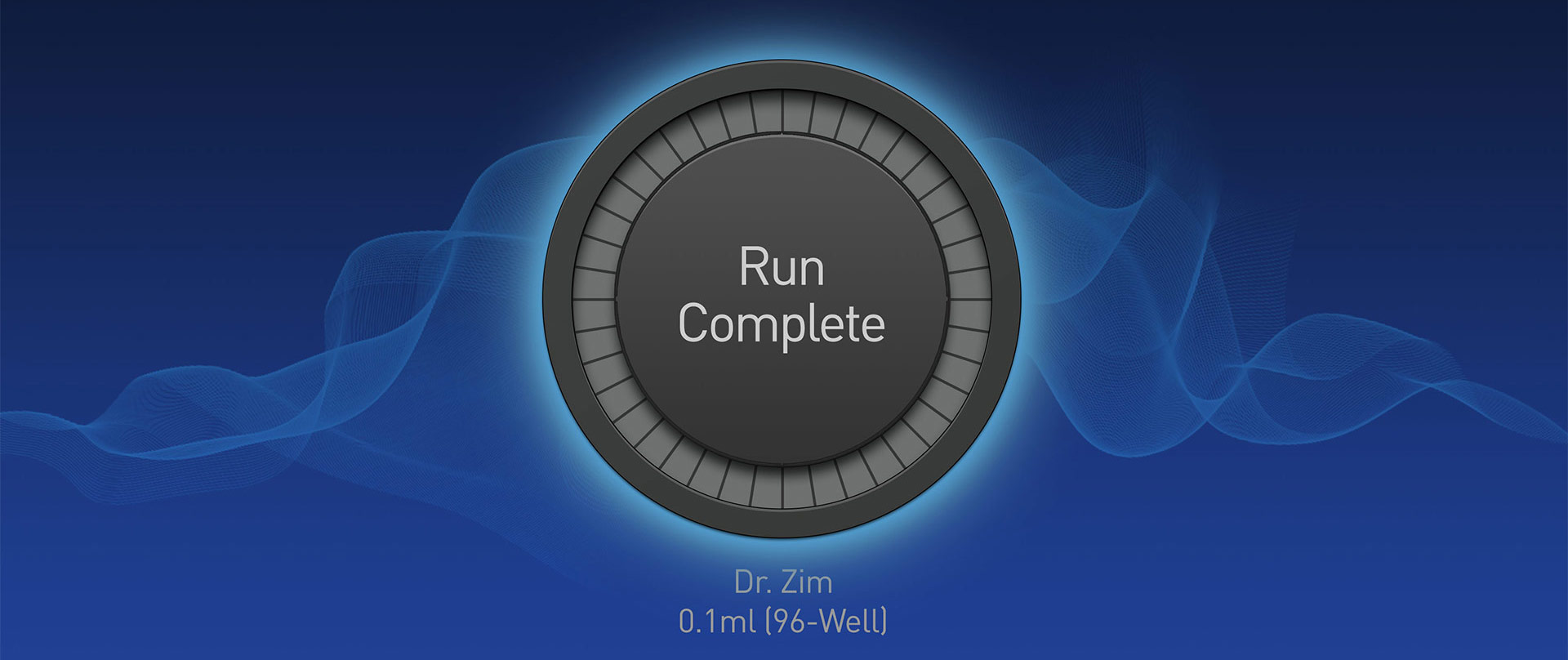
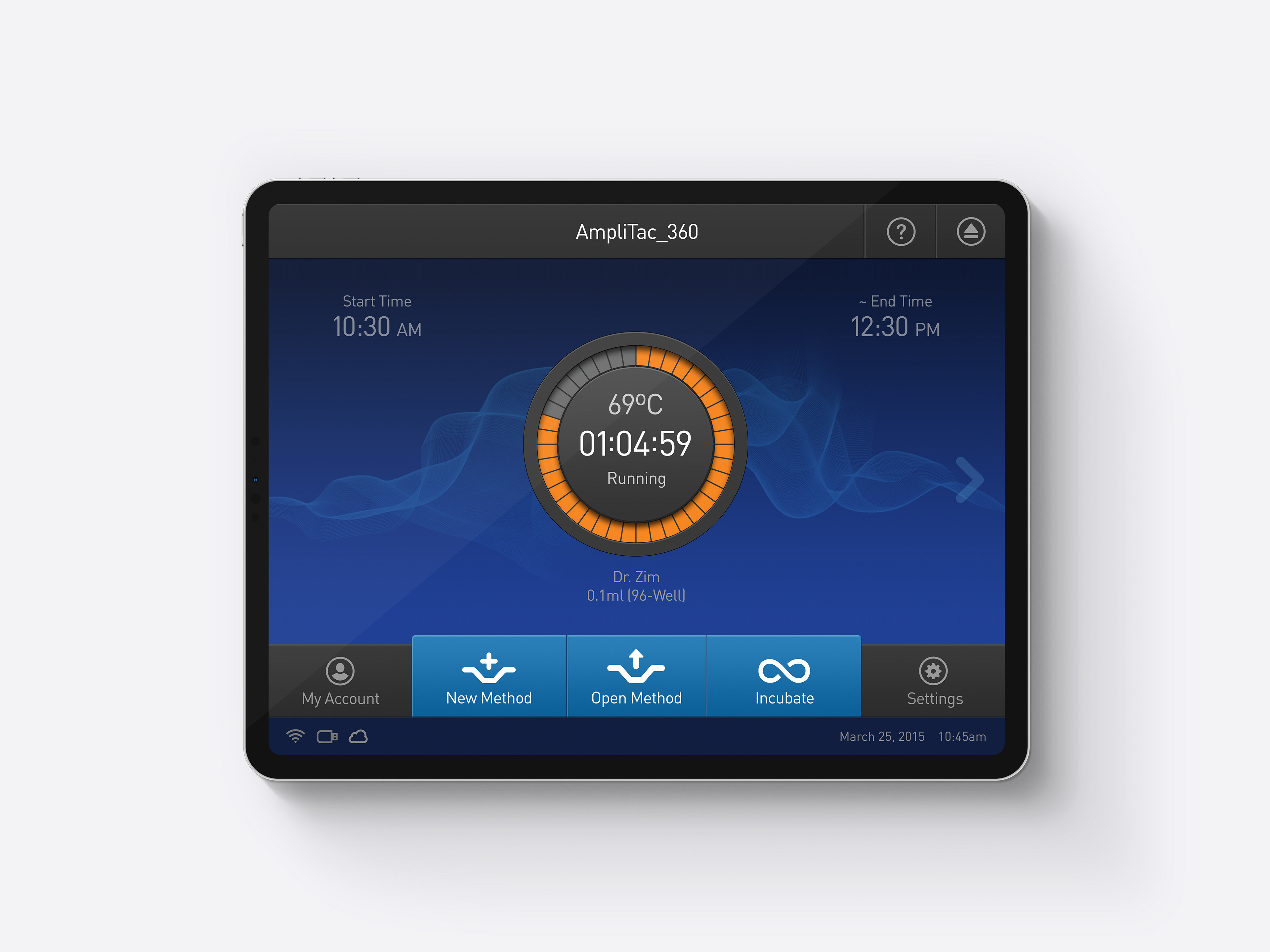
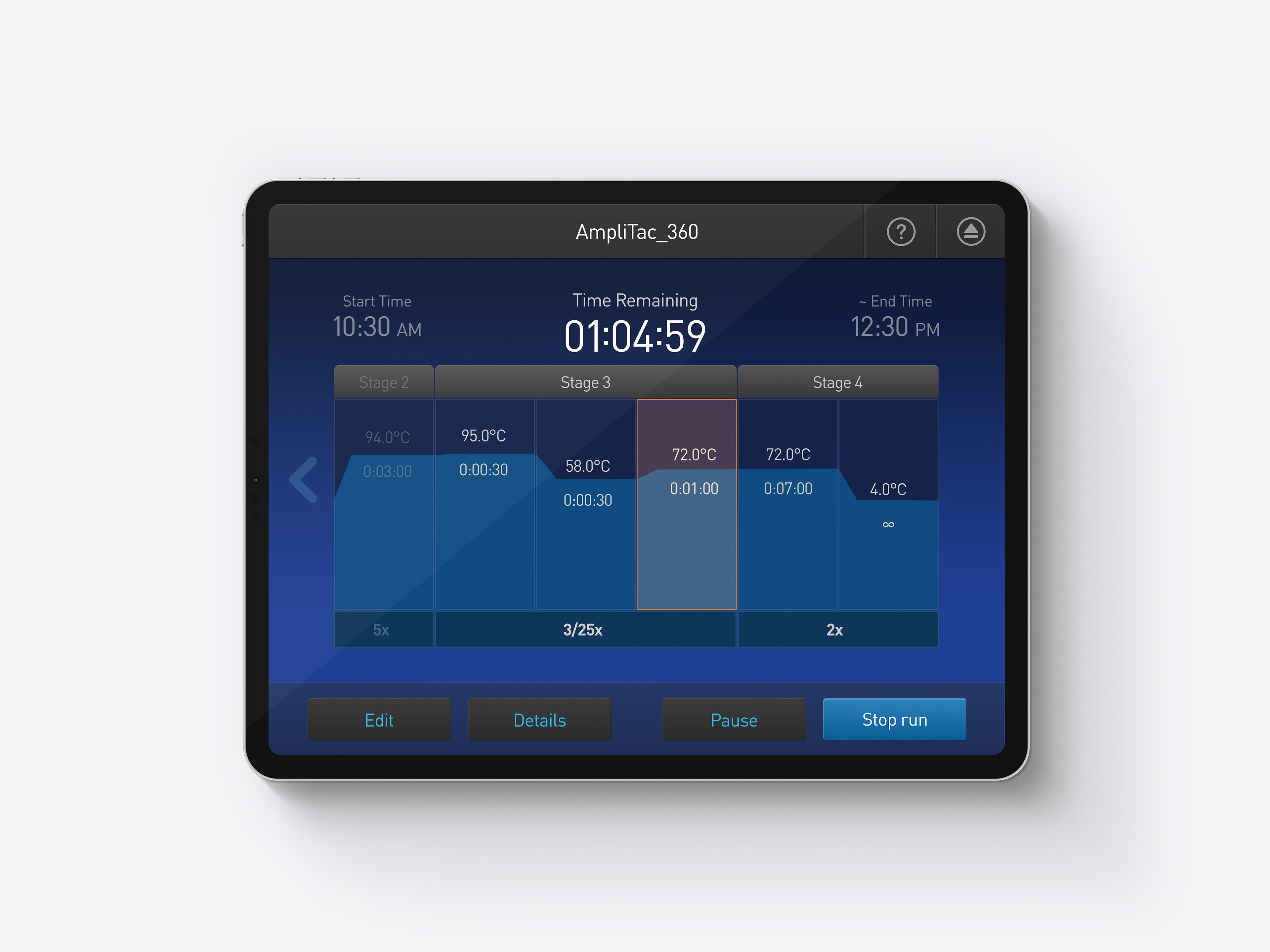
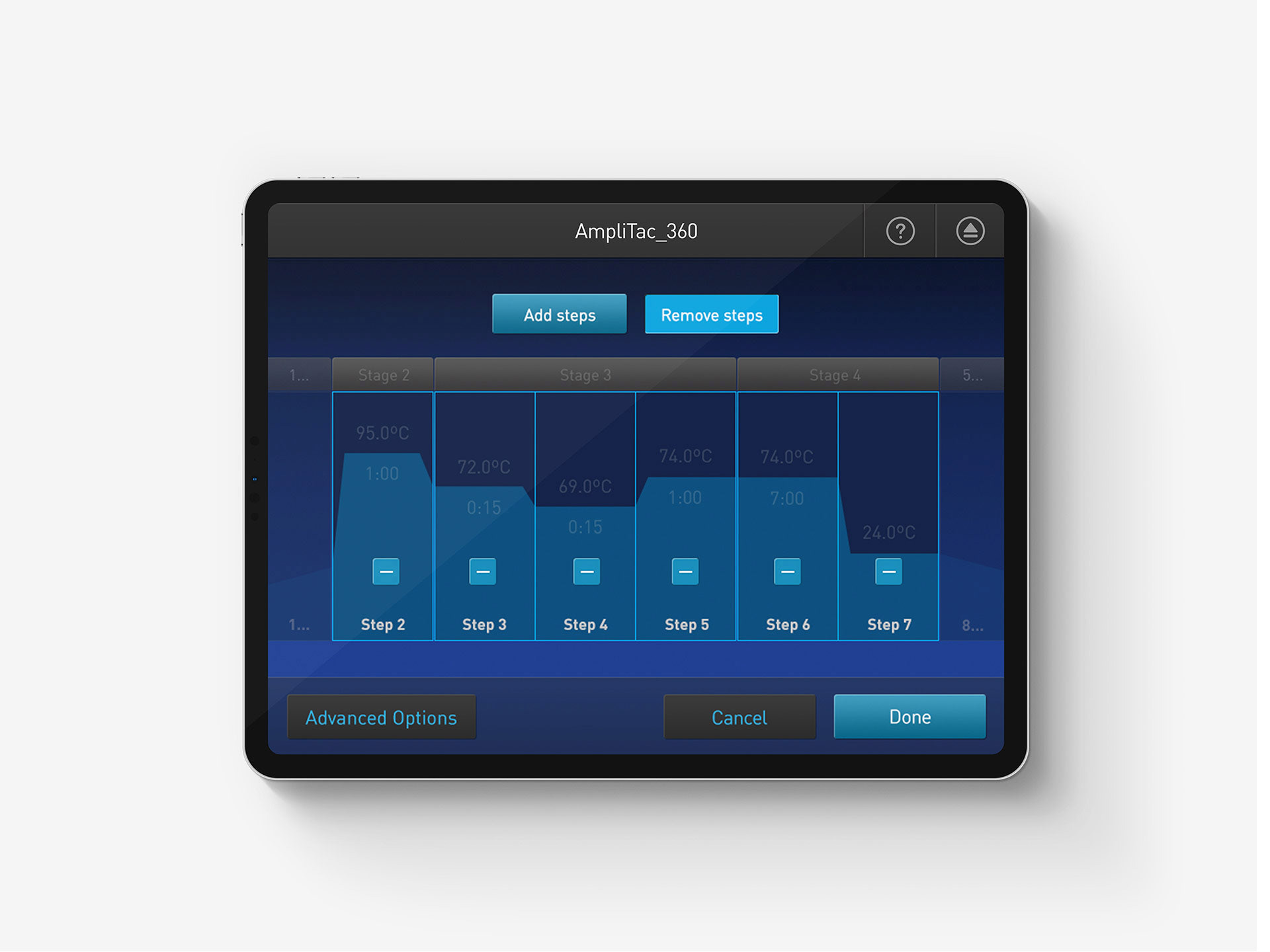
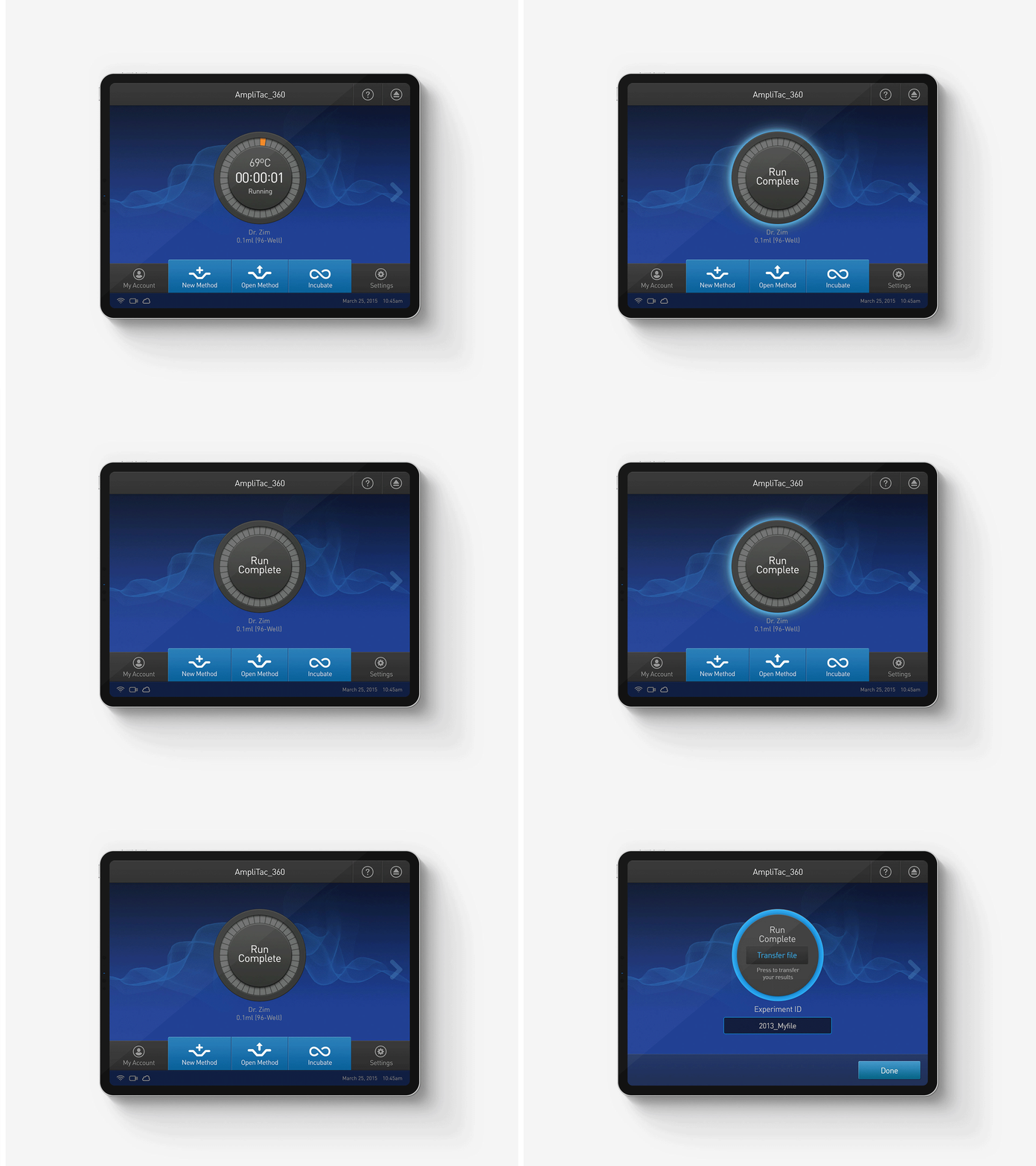
A common observation in labs filled with various instruments was the inconsistency in screen layouts. How could we unify these screens despite their different work states? The key would be to deeply understand the core workflow. At a high level, the workflow consisted of three main parts: Setting up the run, performing the run, and finishing the run. This high-level perspective led us to conceptualize a specifici design component that could represent each state of a flow: an empty state, a filled state, and then back to another empty state. This line of thinking led to the creation of the dial.
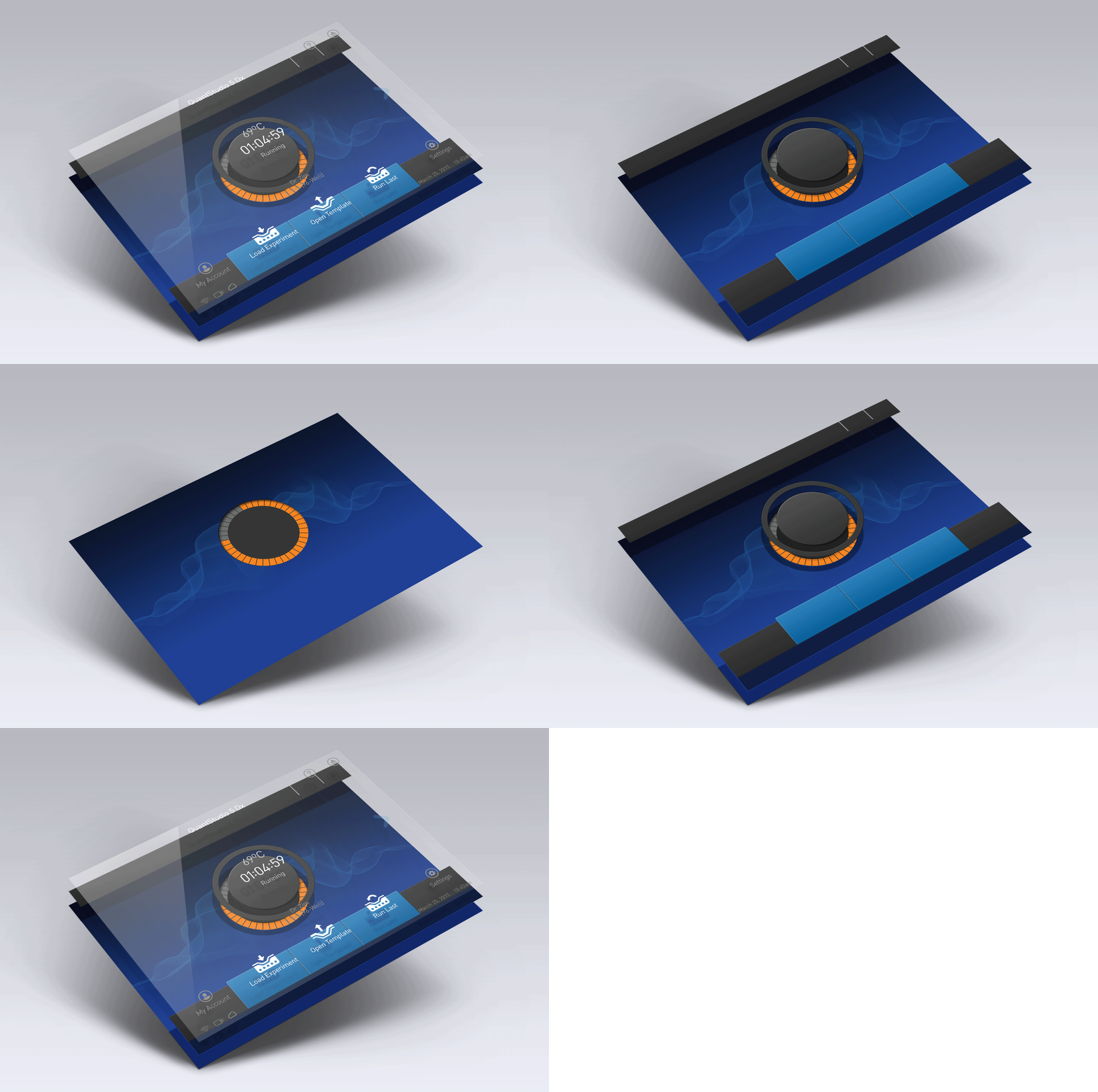
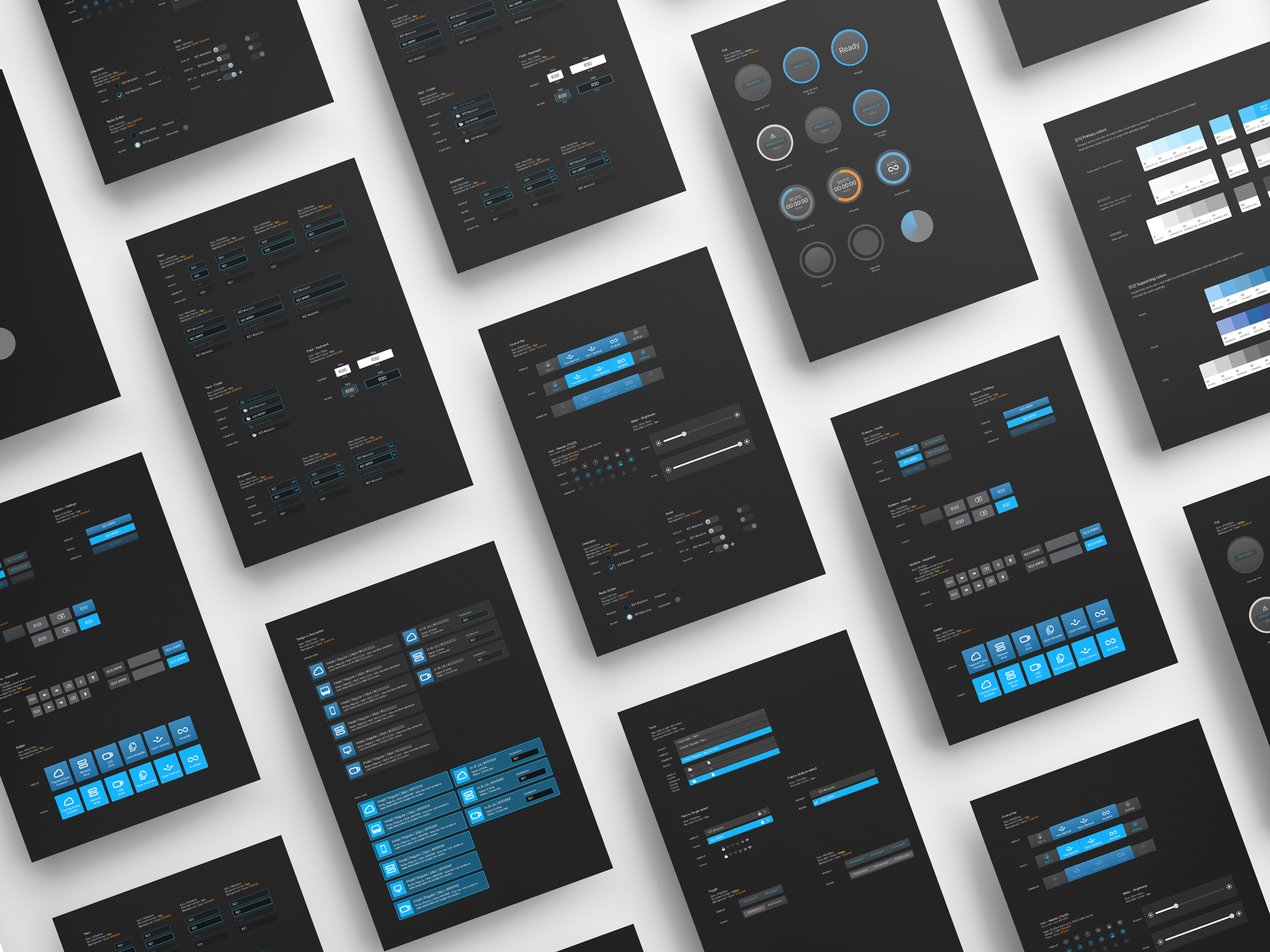
Templates and Component Creation
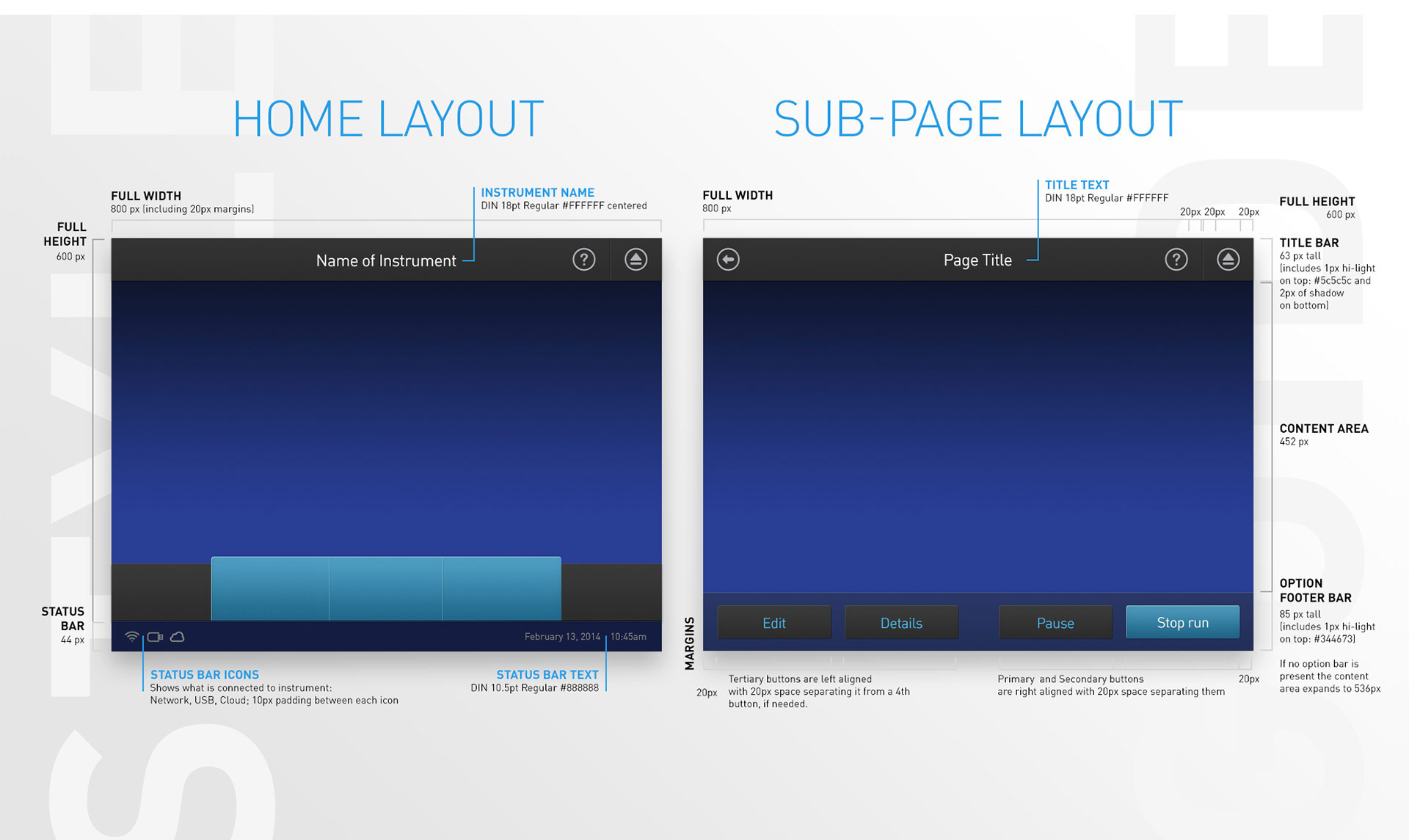
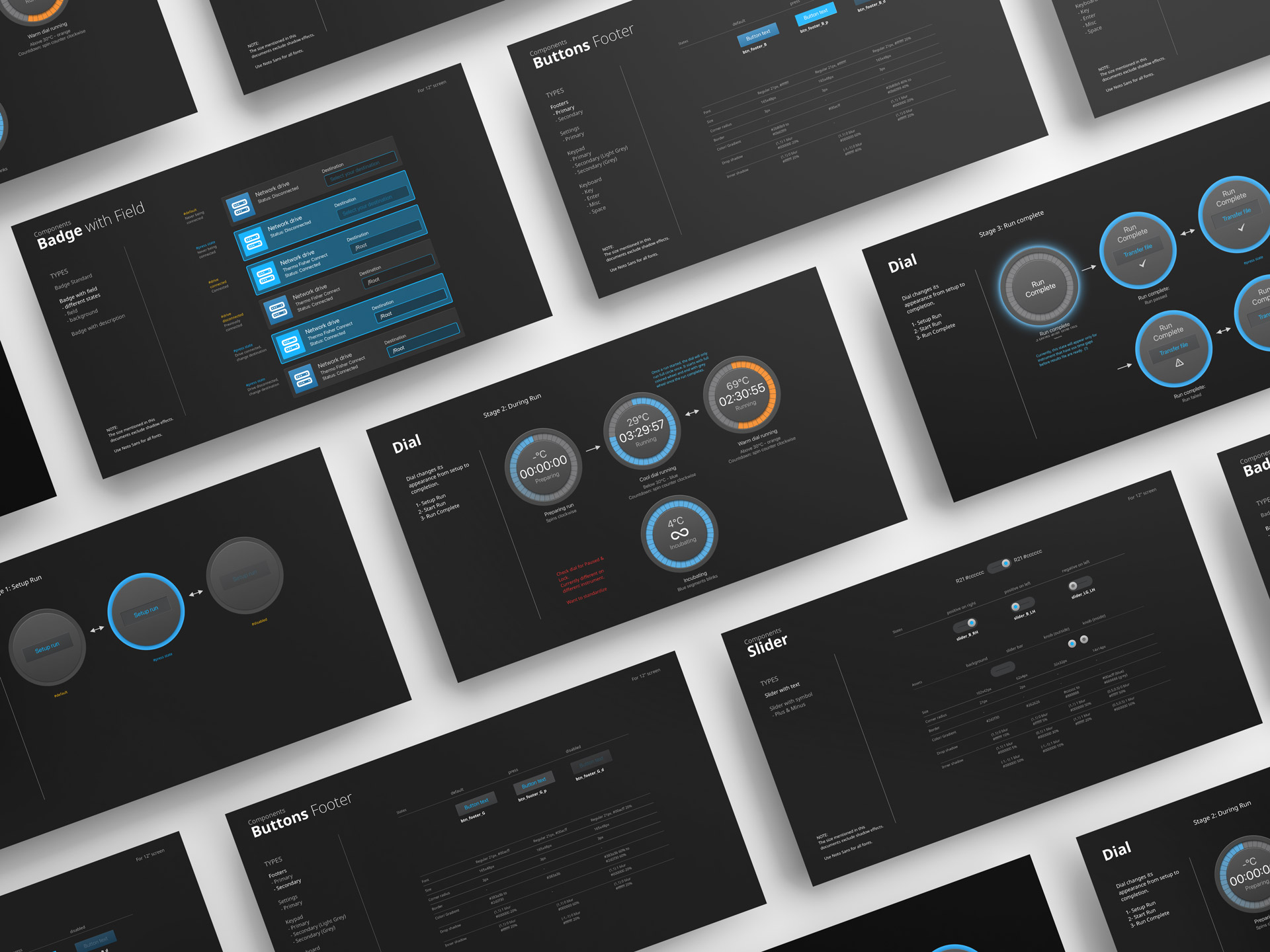
After a lot of research and wire framing, we were finally able to start finalizing a set of components, to be added to our library. From here, I set out to create a set of templates to be used, along along with a style guide, to help development teams implement final code. I also took part in weekly style guide meetings with other user experience designers in the company (marketing). Although they worked on websites and other applications, it was important that they also were informed with products style guide, so we can all work in harmony.
The Final Product
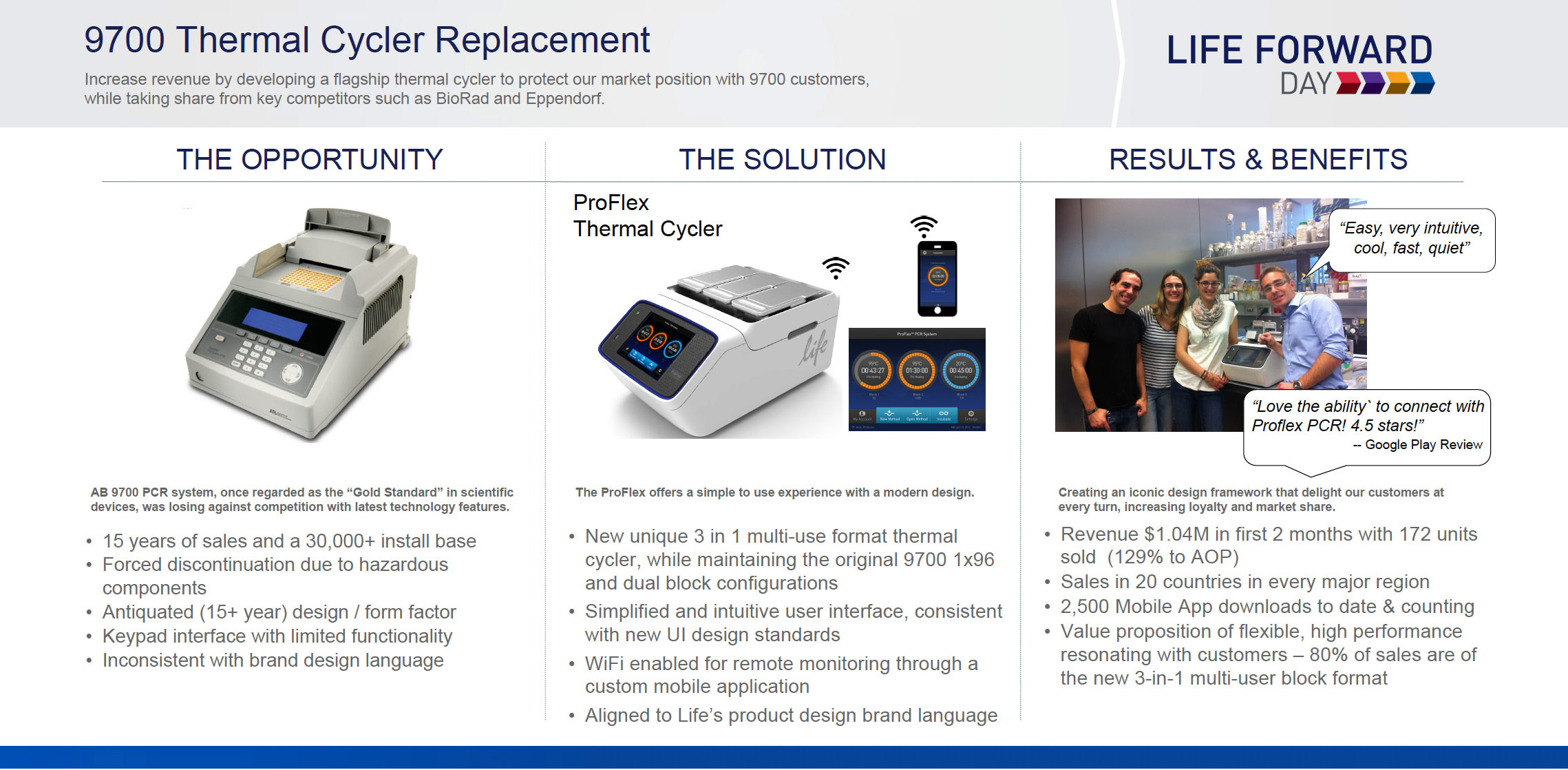
After the successful launch of the ProFlex PCR instrument, Life Technologies began to see strong profits and growing demand. New project requests quickly followed as word of its success spread across the organization.
The positive feedback from users and stakeholders was overwhelming, and within just a couple years, Life Technologies was acquired by Thermo Fisher Scientific–an acquisition that underscored the impact and value of the work being done.
Today, the success of these innovative products can be seen and felt worldwide. It's been especially rewarding to watch the full family of thermal cyclers evolve and mature. In just 10 years time, the new brand I had created was fully baked into the company's thermal cycler platform. The video below showcases that family, in all it's glory.
Mobile Application Platform
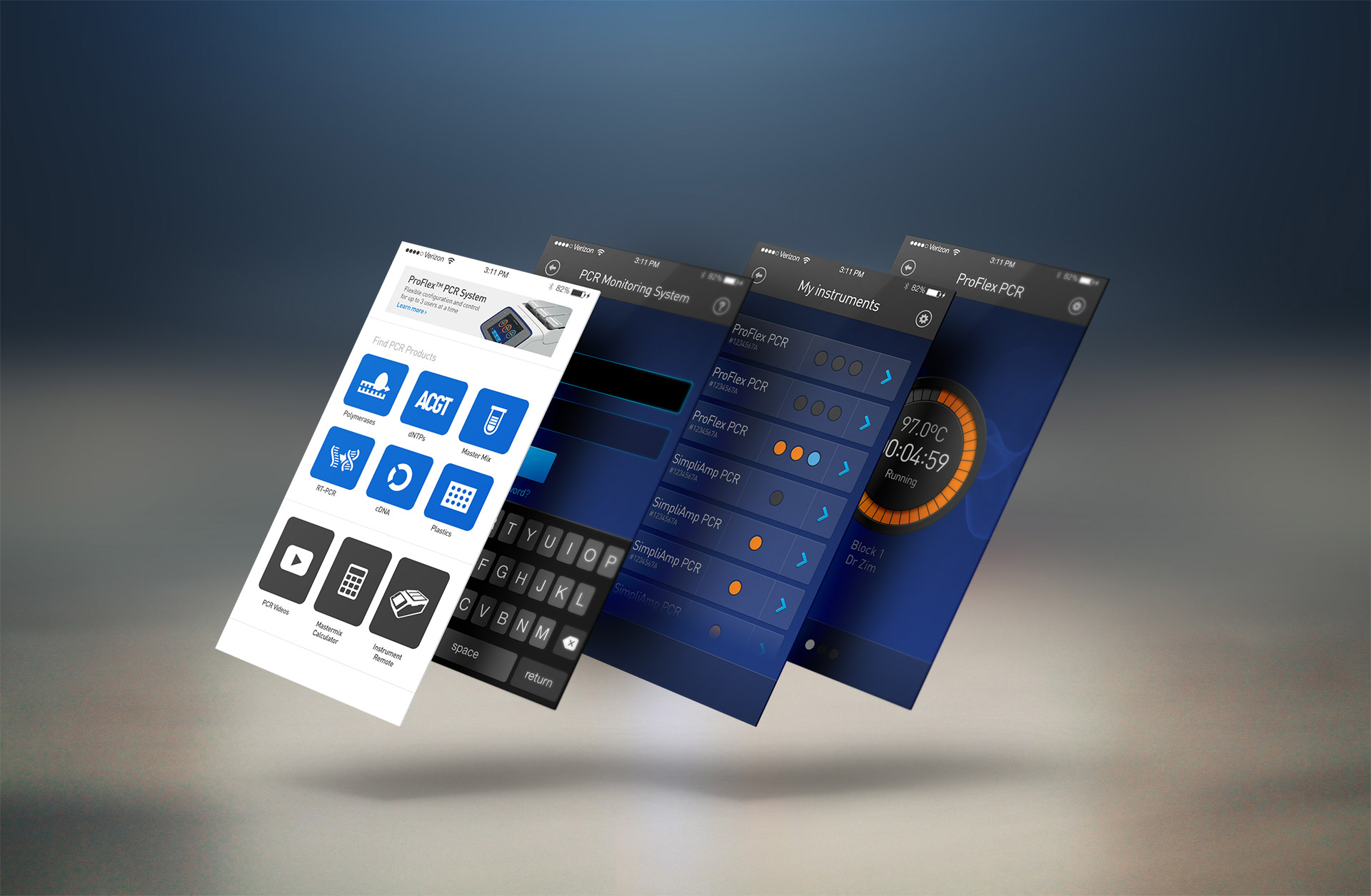
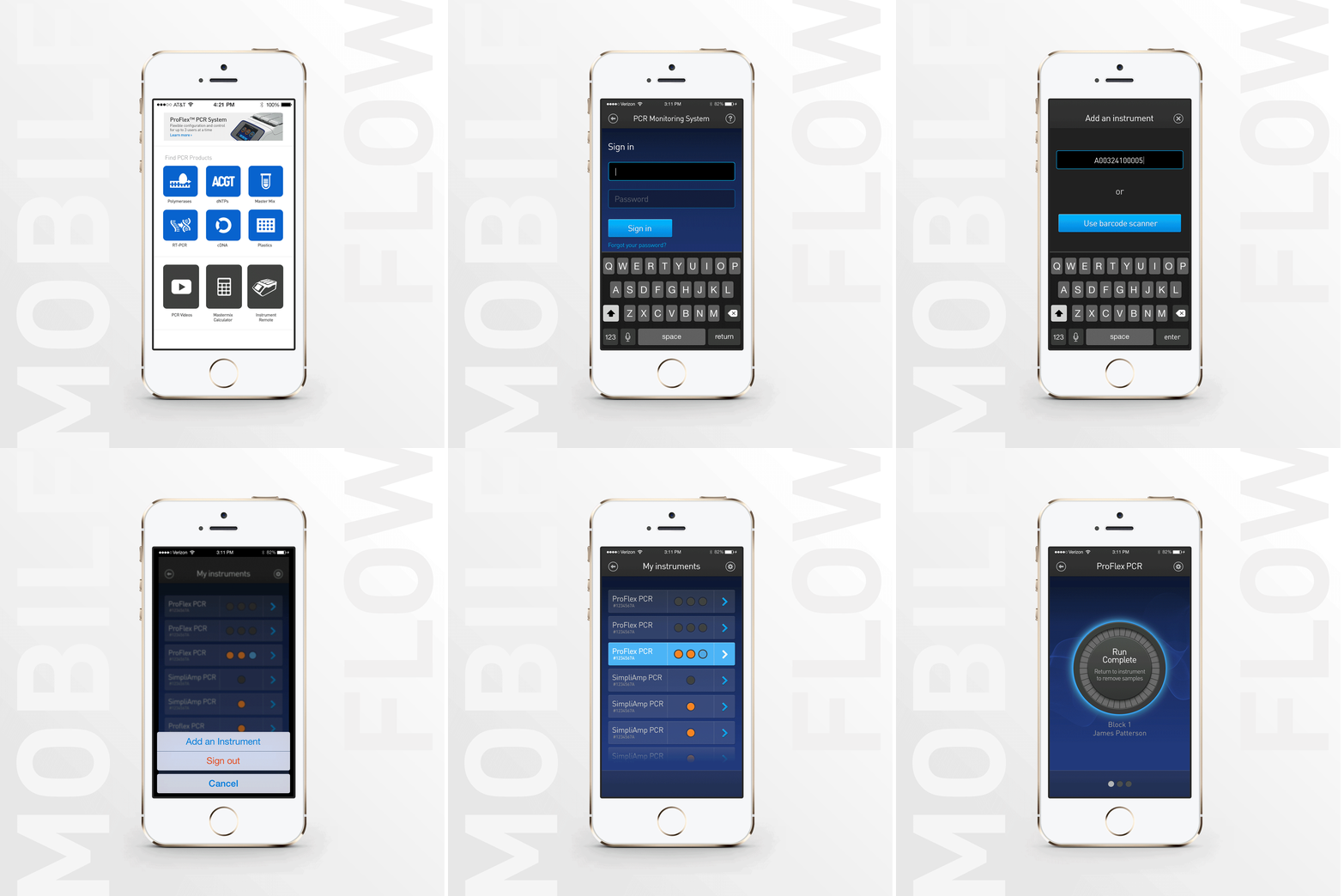
Following the success of the initial PCR instrument launch, I was asked to help design a mobile design system for the PCR Essentials app. This tool was created for molecular biology researchers to easily access product information on Taq polymerases, dNTPs, gels and stains, RT-PCR products, cDNA products and master mixes.
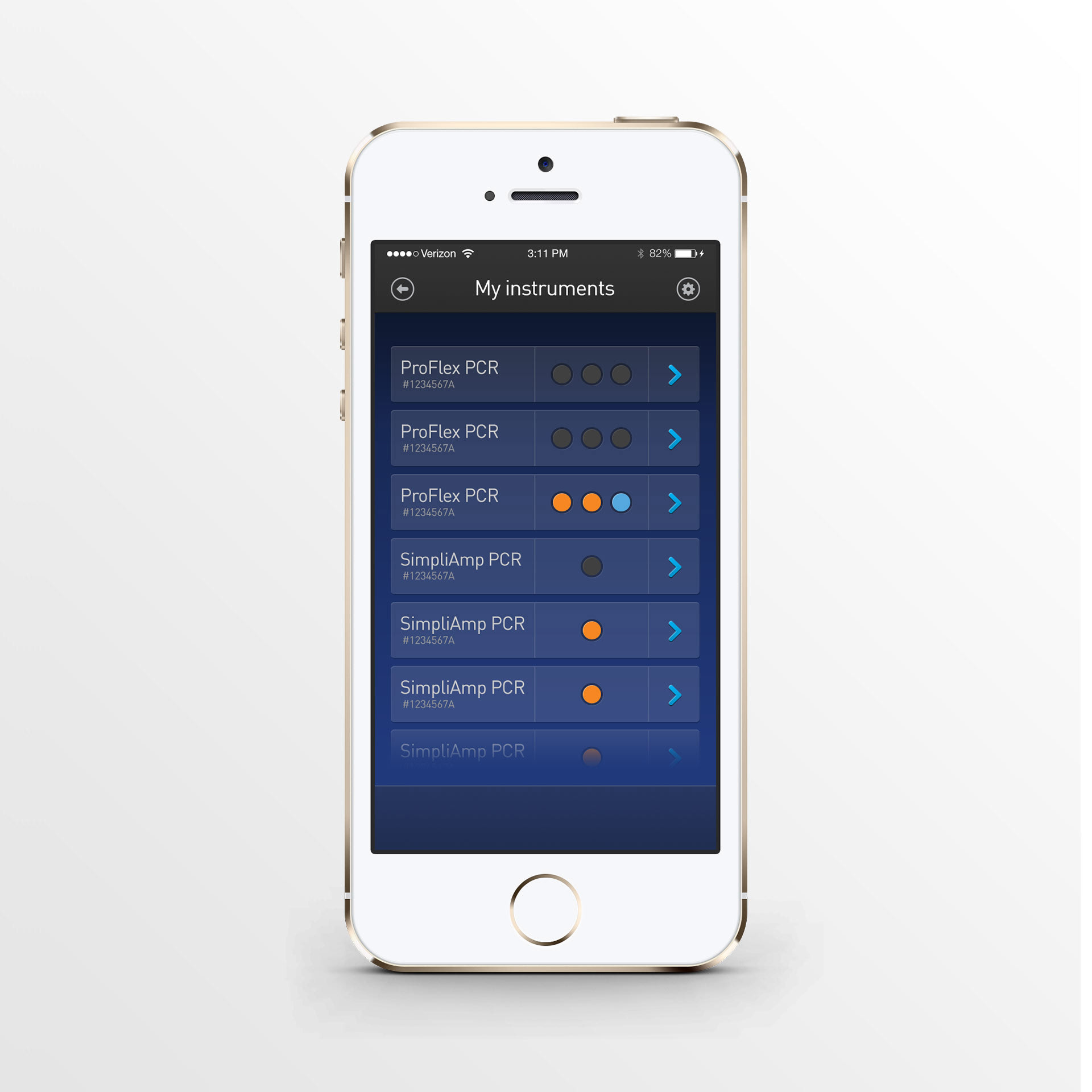
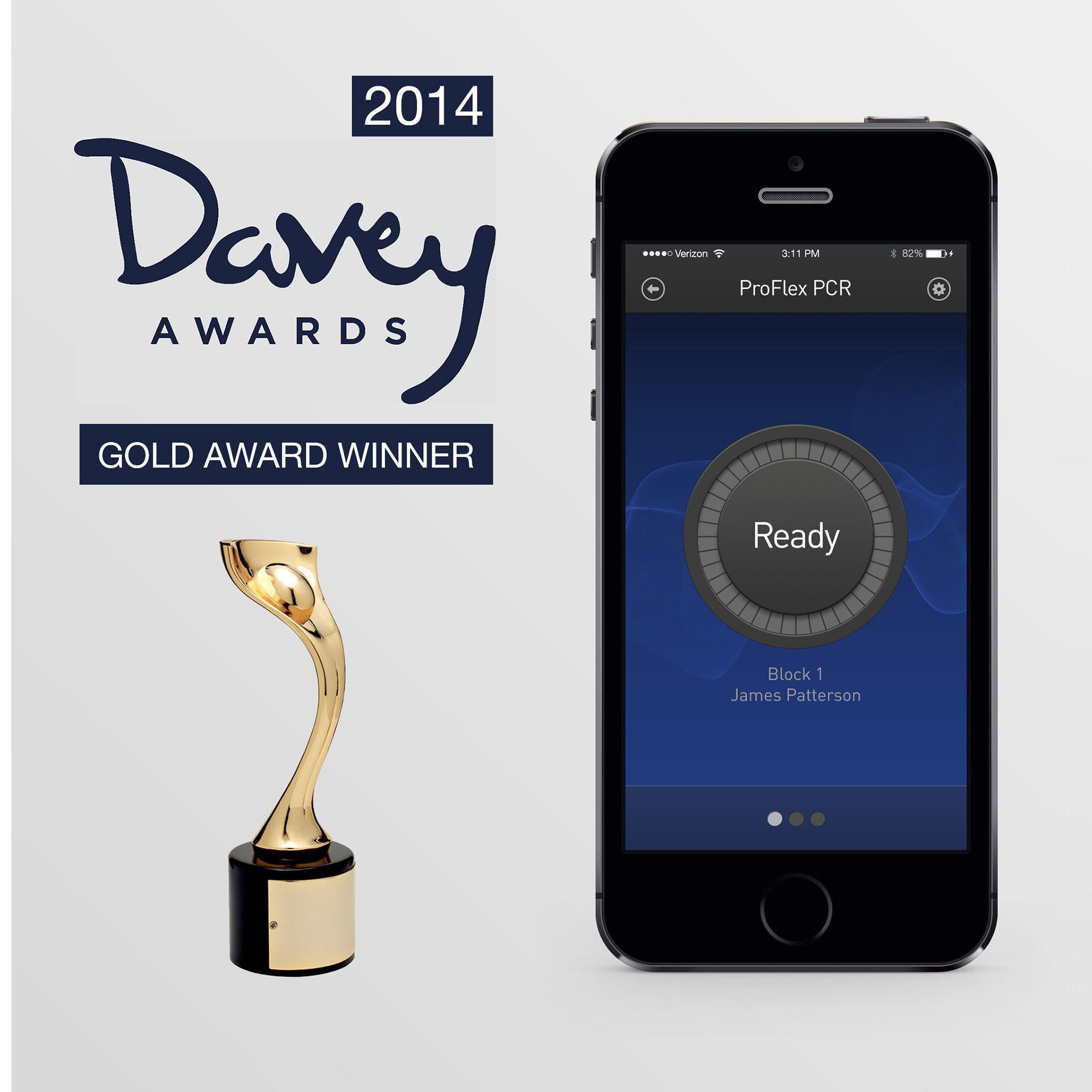
A key feature of the app was the ability to monitor PCR runs remotely – a first in the industry. Researchers could now set up runs, leave the lab, and receive real-time updates on progress, giving them unprecedented flexibility. The app also included a Master Mix Calculator, allowing users to design and share mixes directly via text or email.
This project gave the company a strategic edge at a time when the life sciences industry was slow to adopt mobile technology. The PCR Essentials app went on to win a Gold Davey Award for mobile application design.