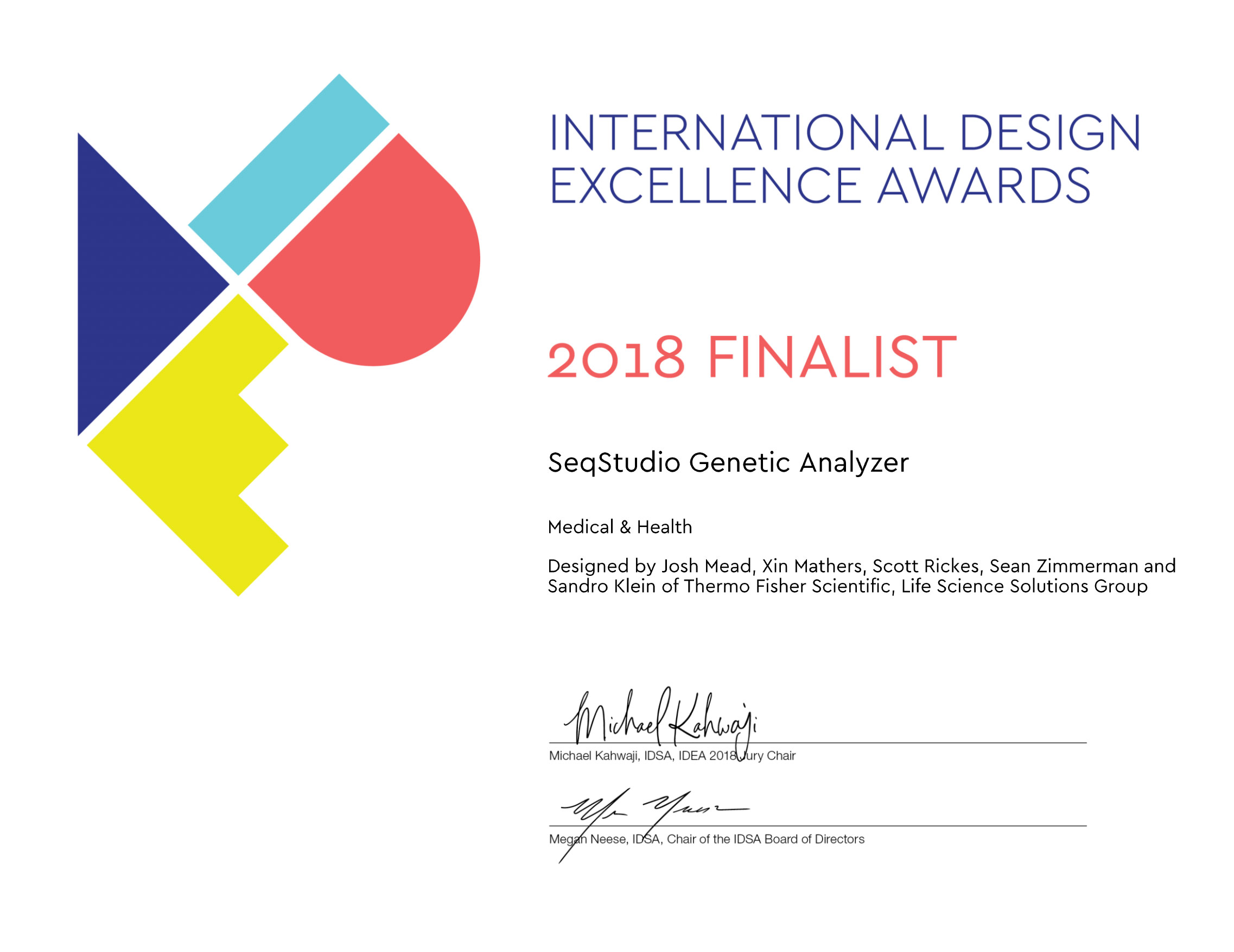
Product
Team
--------------------------------------------
--------------------------------------------
1 UI Designer
1 UX Designers
1 Industrial
Designer
-------------------------------------------
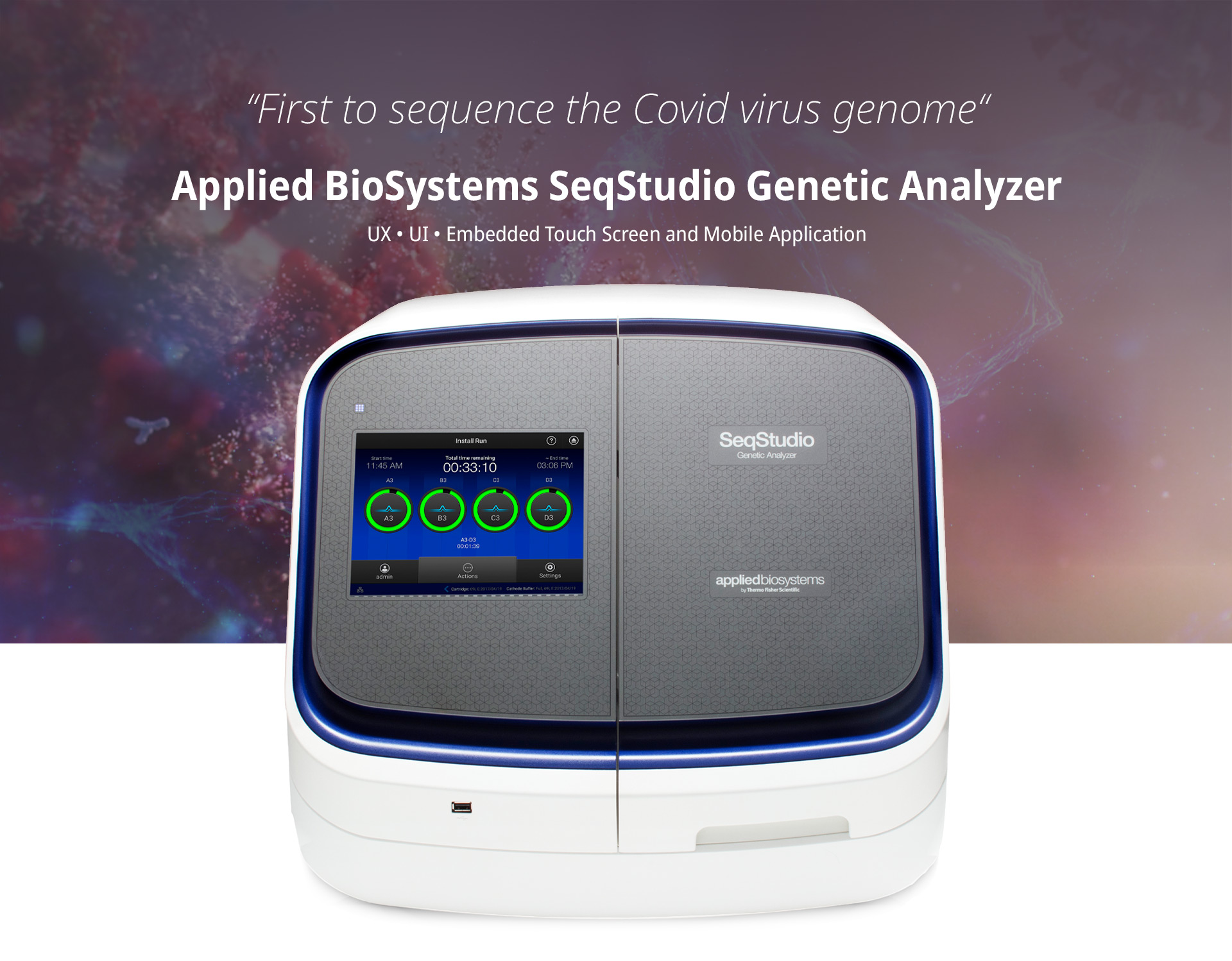
In
January of 2020, scientists in Australia were first to sequence the COVID virus's
genome, using the SeqStudio Genetic Analyzer. This sequence provided the roadmap
to creating a diagnostic test that's used around the world,
today.
Project duration: 2 years
Project duration: 2 years
Overview
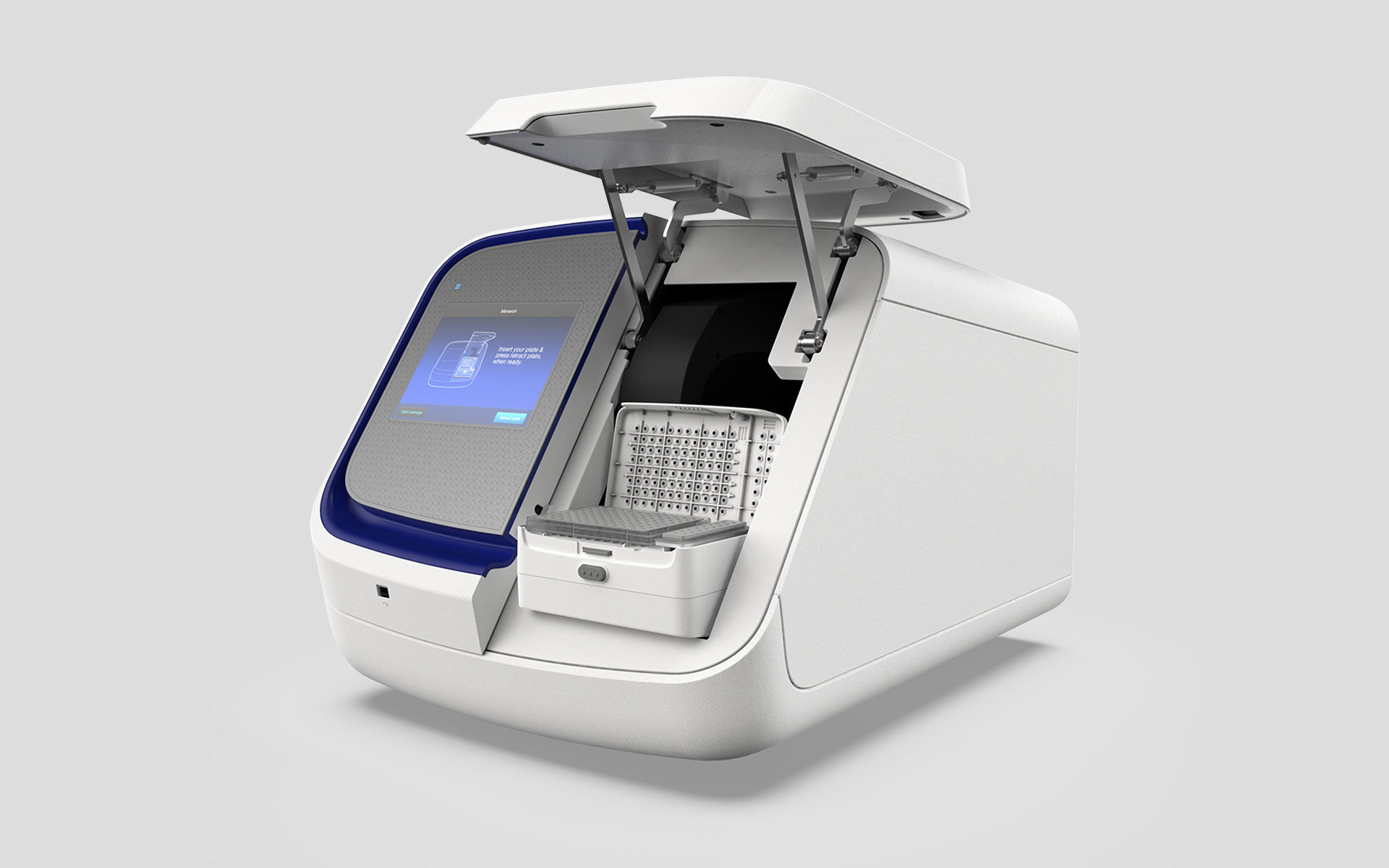
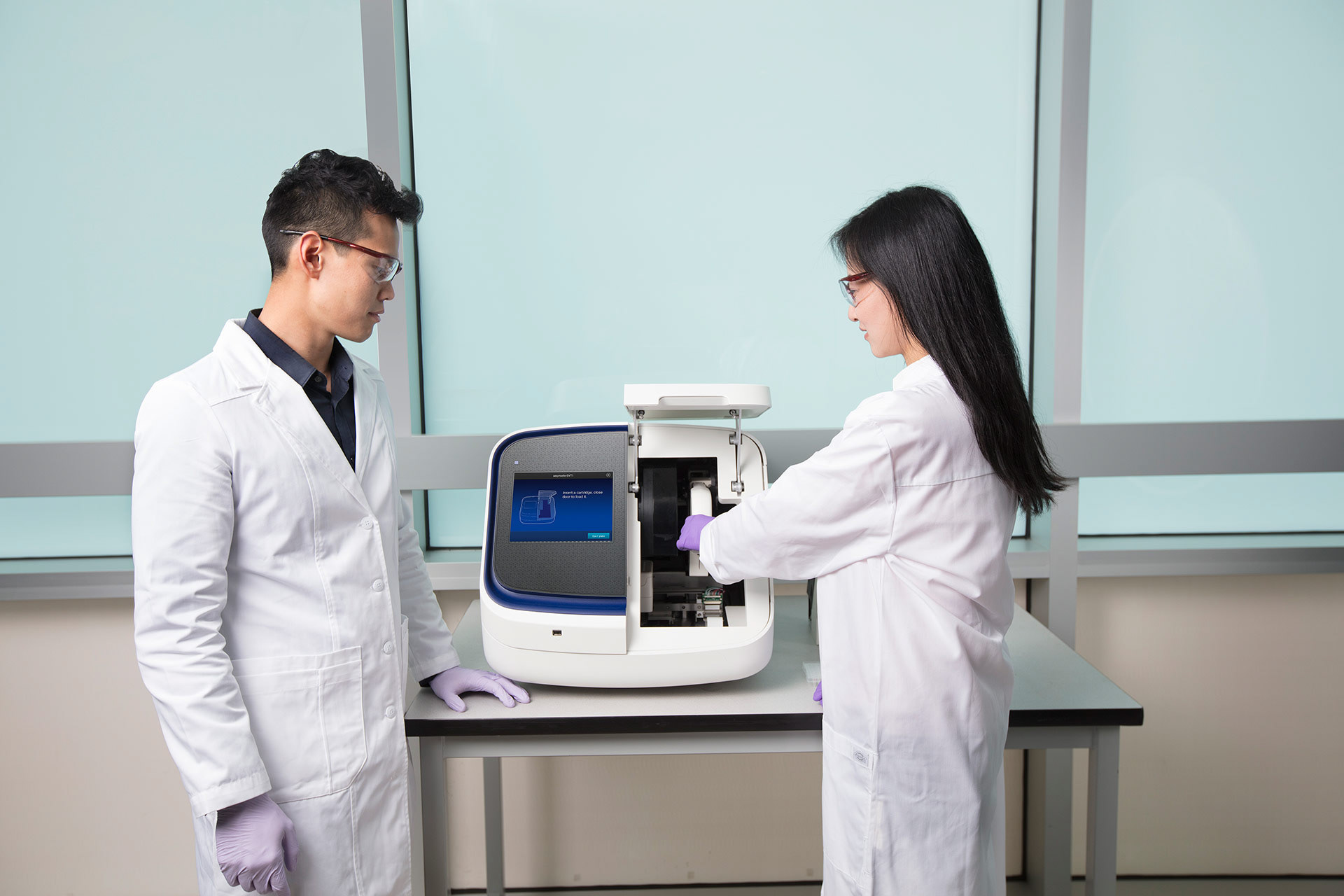
Designed for use by research assistants and scientists, the
SeqStudio Genetic Analyzer is a low-throughput, easy-to-use system that makes running
capillary electrophoresis (CE) experiments easier. It also facilitates collaboration
through Thermo Fisher Cloud based sharing and applications, and introduces new
opportunities to run both sequencing and fragment analysis samples at one time.
The
Challenge
Introduce a new design
philosophy to a set of customers, in a completely different field of science.
Something I can tell you about scientists is they don't like change. When
something "seems" to be working for them, they really don't want to change
anything. Our new approach will make setting up a run faster, with the ability
to share information and collaborate like they had never done before. Also, this
analyzer should be able to perform simultaneous sequencing and fragment analysis
runs on the same plate. With this in mind, we would have to create easy-to-use
plate interactions, while simultaneously able to share this information in the
cloud.
My
Approach
Collaborate with my UX
and Research partners to help calm the nerves of the product team by utilizing
the elements already established from the design system, and apply them to
this project (so there is commonality). Also, it will be important to share
common learnings from previous projects, and make time for usability tests in
this timeline.
The
Philosophy
Since these are touchscreens, they should follow the
same principles as mobile and tablet devices. Ensuring scientists can complete their
tasks efficiently is crucial—it could mean the difference between life and
death.
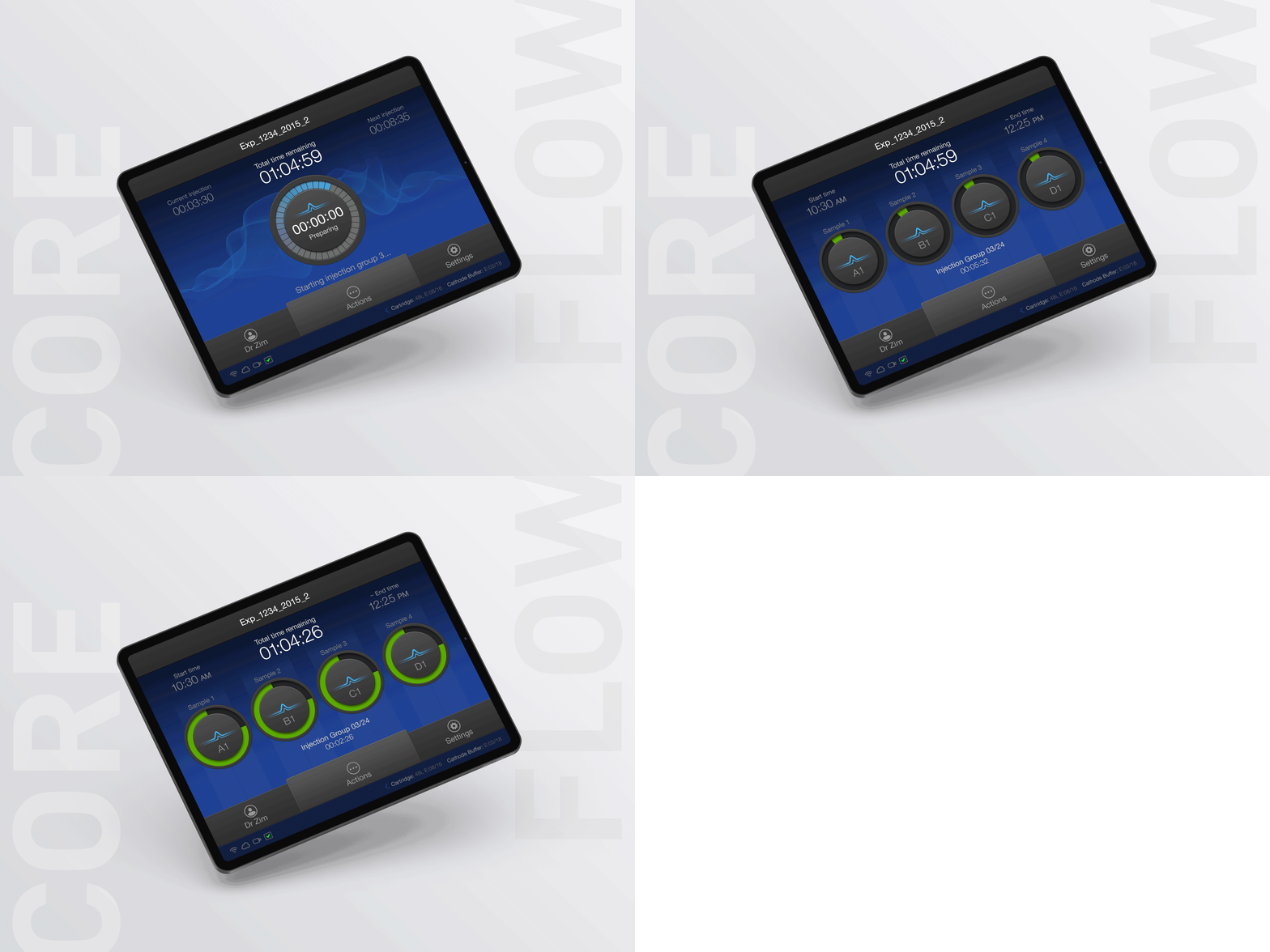
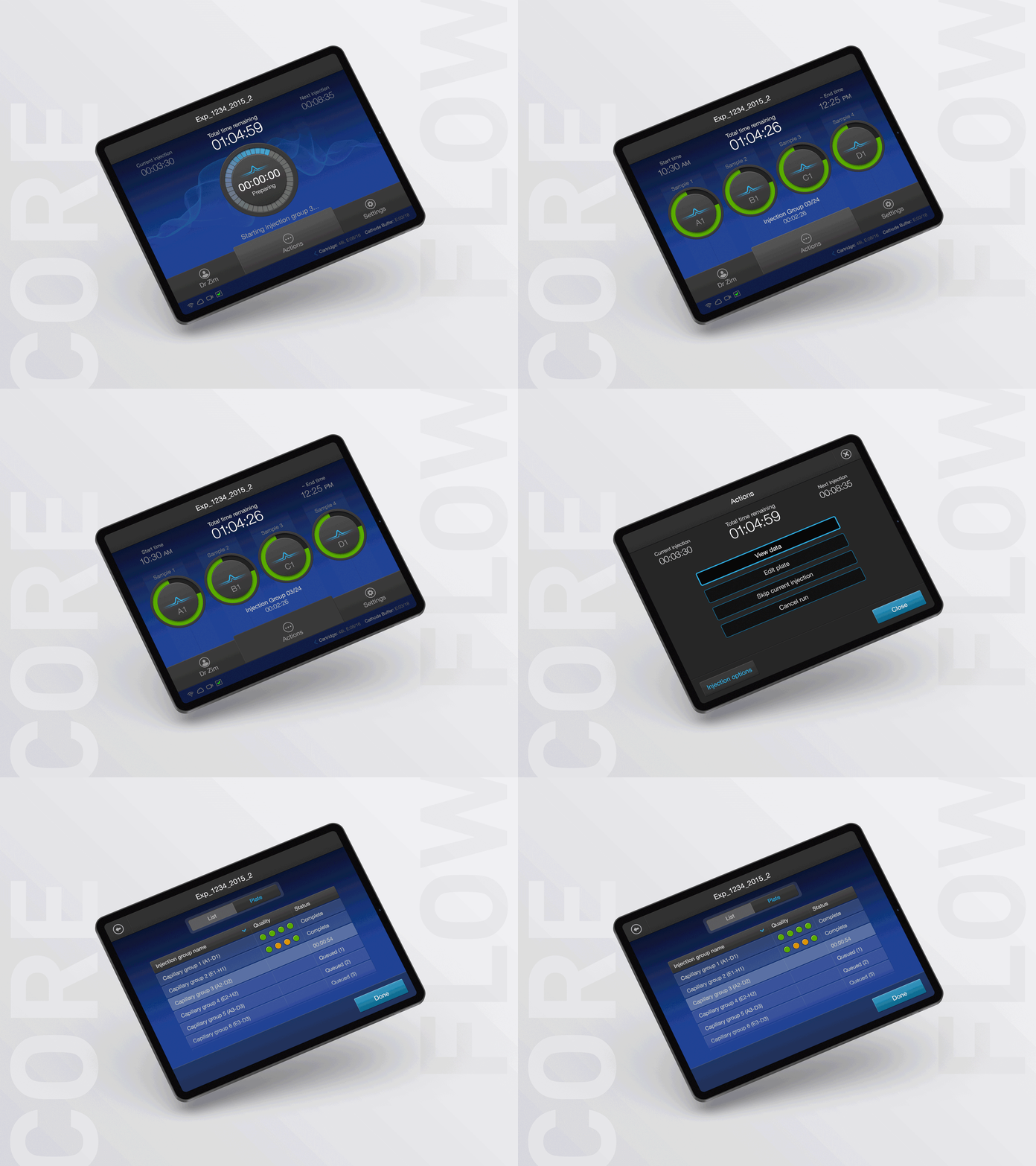
Our design philosophy mirrors mobile applications,
prioritizing simplicity and usability. While this approach may seem straightforward, it
requires distilling everything to its most essential form. For example, see the graphic
below:
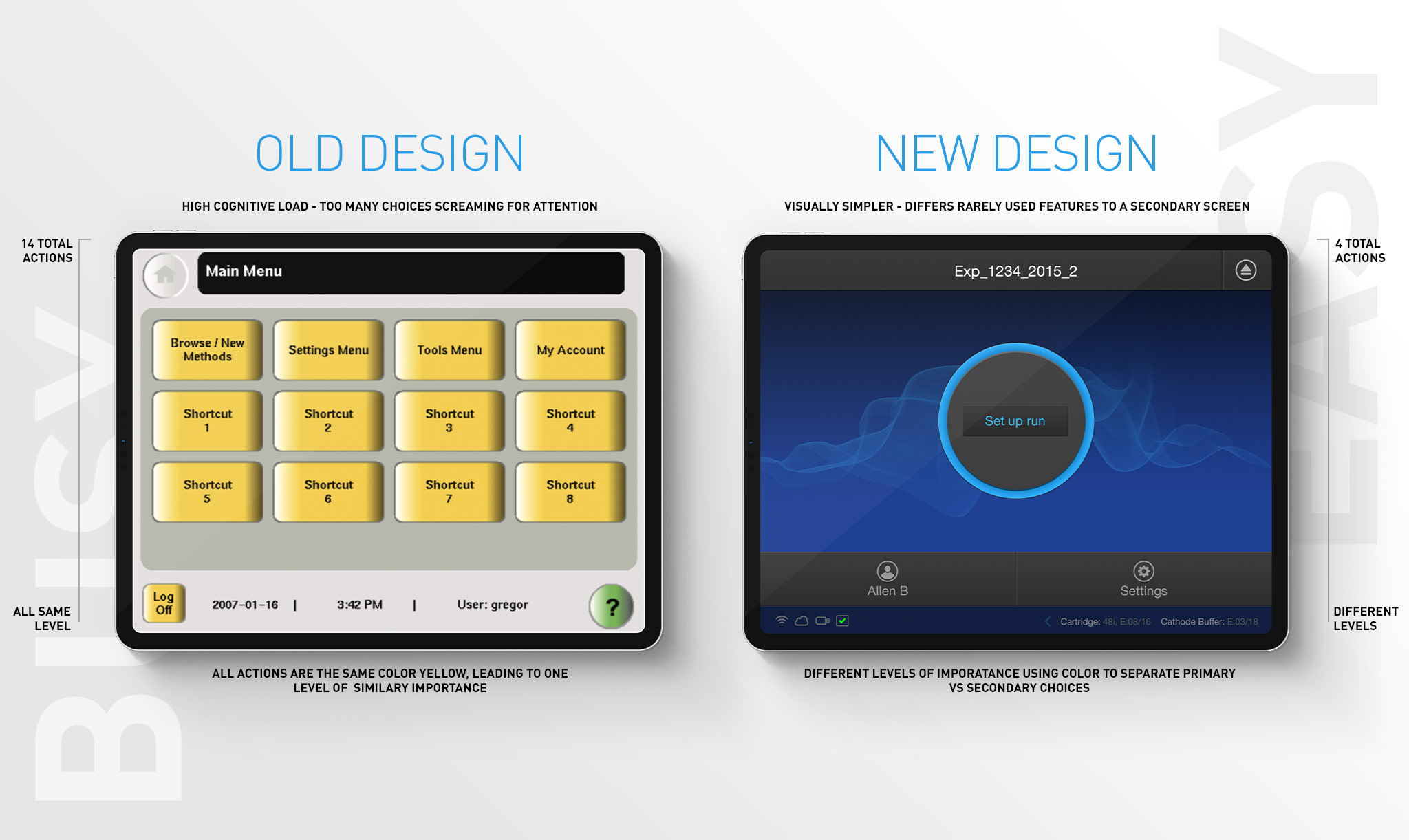
In every design project, our
primary task is to identify the main focus of each page. There's always one. Our
responsibility is to recognize it and ensure a smooth flow. By streamlining tasks, we help
users feel in control, which is the essence of our design philosophy. This approach aligns
with the well-known concept of Progressive Disclosure. The principle is straightforward:
relegate advanced or seldom-used features to a secondary screen to make applications
easier to learn and less prone to errors. As a team, we've embraced and taken this
philosophy to its utmost implementation. It's actually what has set us apart from our
competitors.
Color Studies & Plate Design
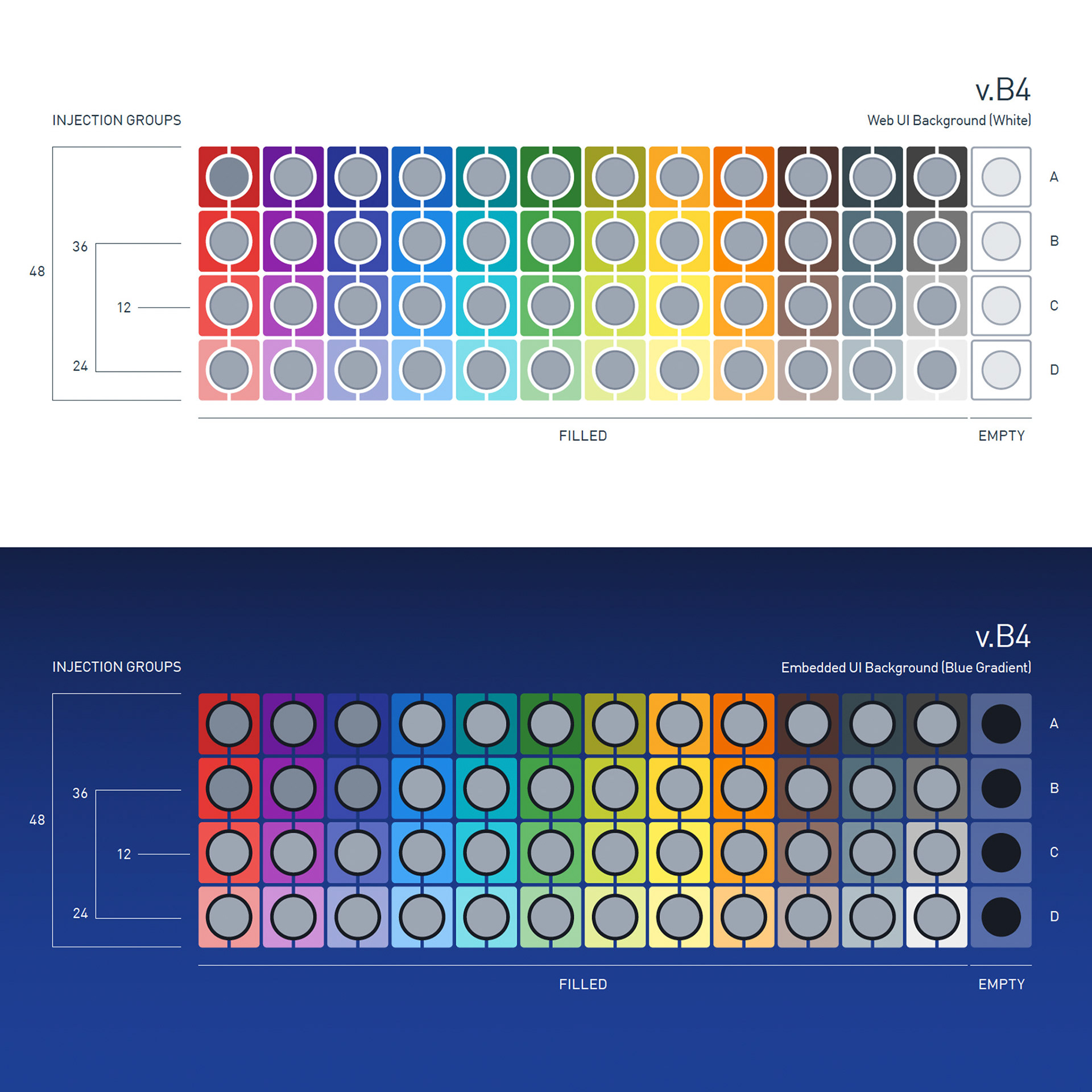
Plates play a crucial role in this project, as
scientists must align their physical plate layouts with the digital interface. To ensure
clarity, we conducted a color study comparing white (used in the analysis web
application) with the darker blue of the instrument interface.
Ideally, colors remain consistent regardless of the
background. The studies below verify that the chosen colors are accessible in both
environments. Additionally, we established a prioritized color selection order—first 12,
second 12, and so on—to maintain consistency.
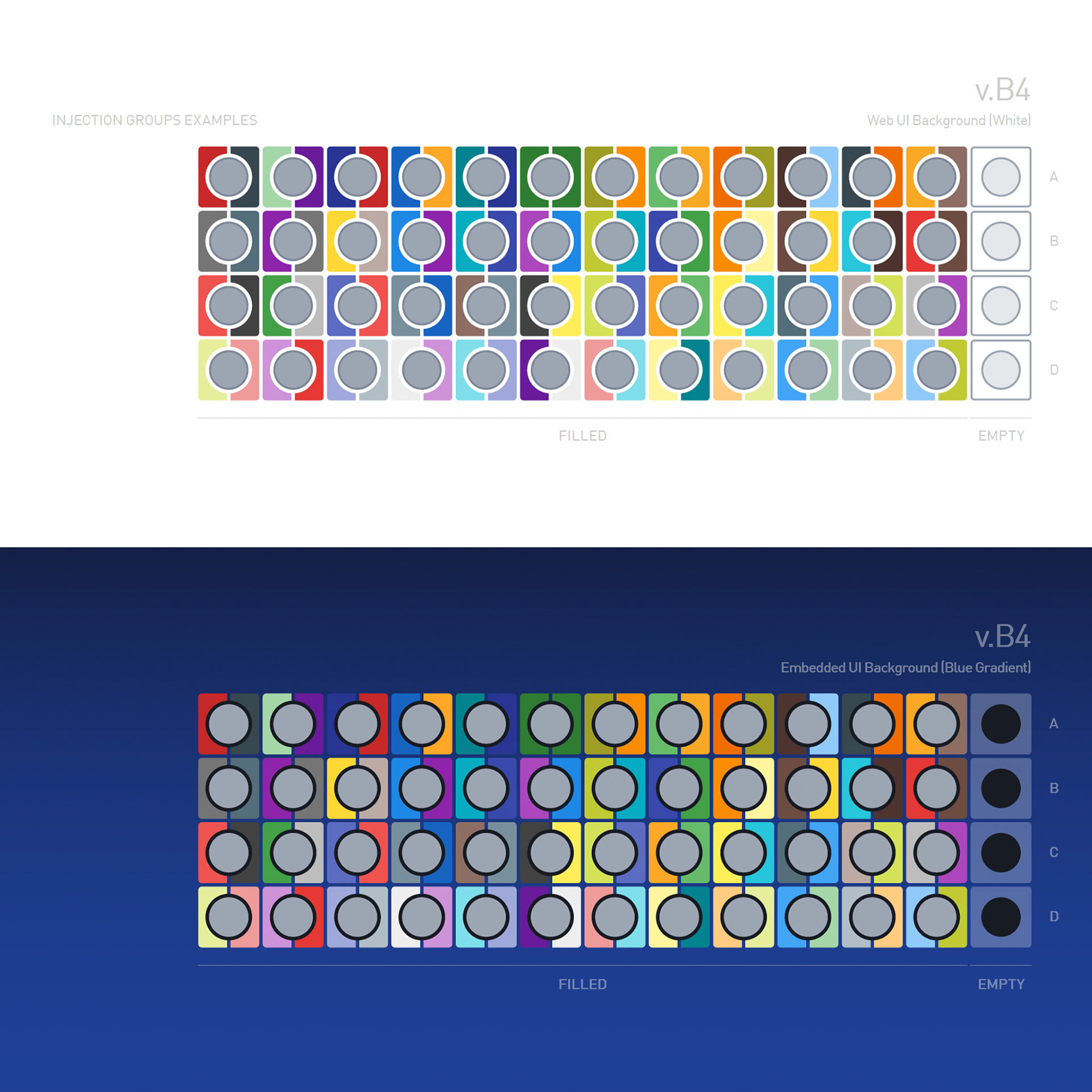
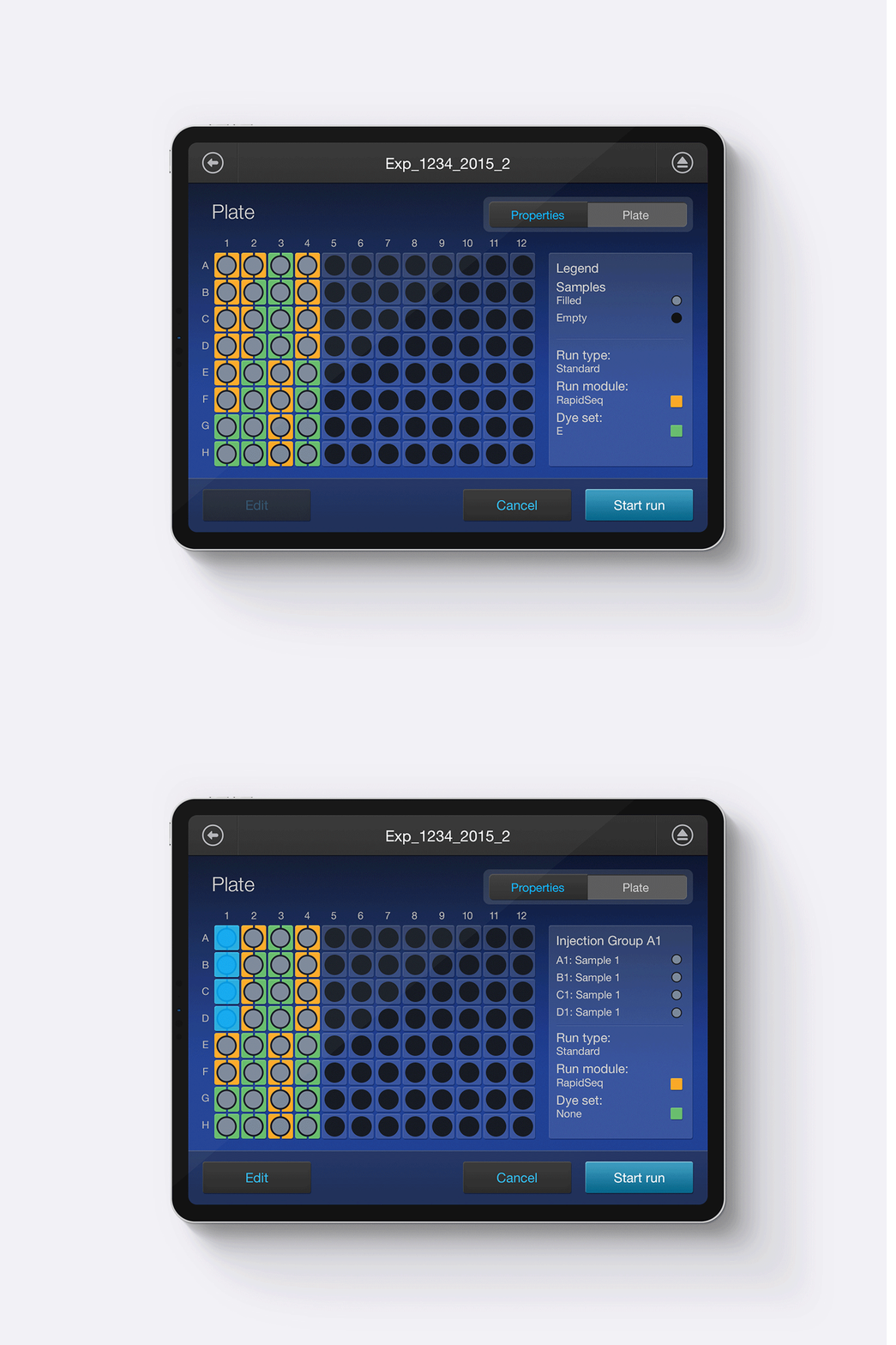
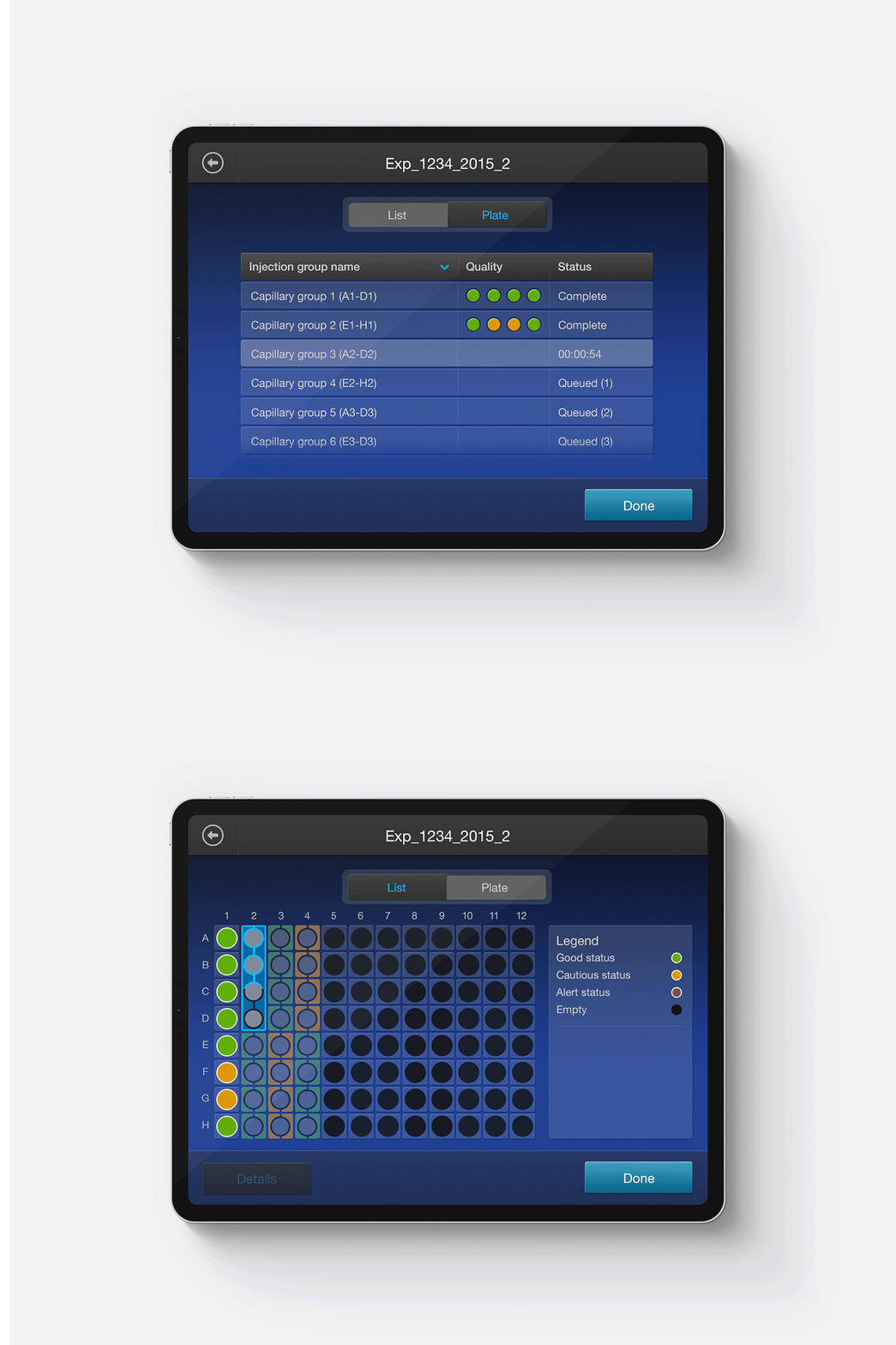
And, here are a few examples of plate interactions.
Providing a legend was essential to help users interpret the plate layout accurately.
Additionally, when selecting an injection group, key information is prominently displayed
for quick access.
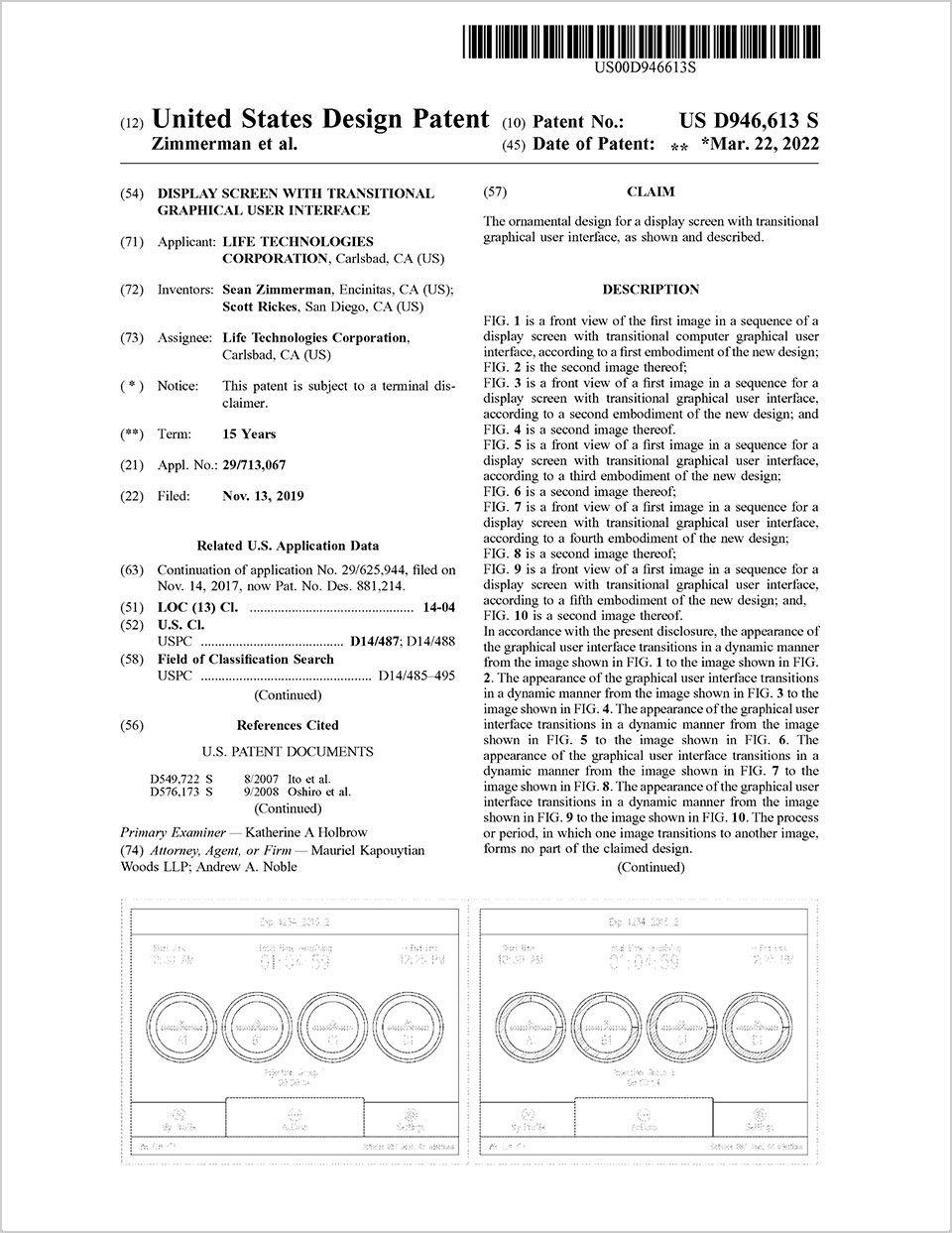
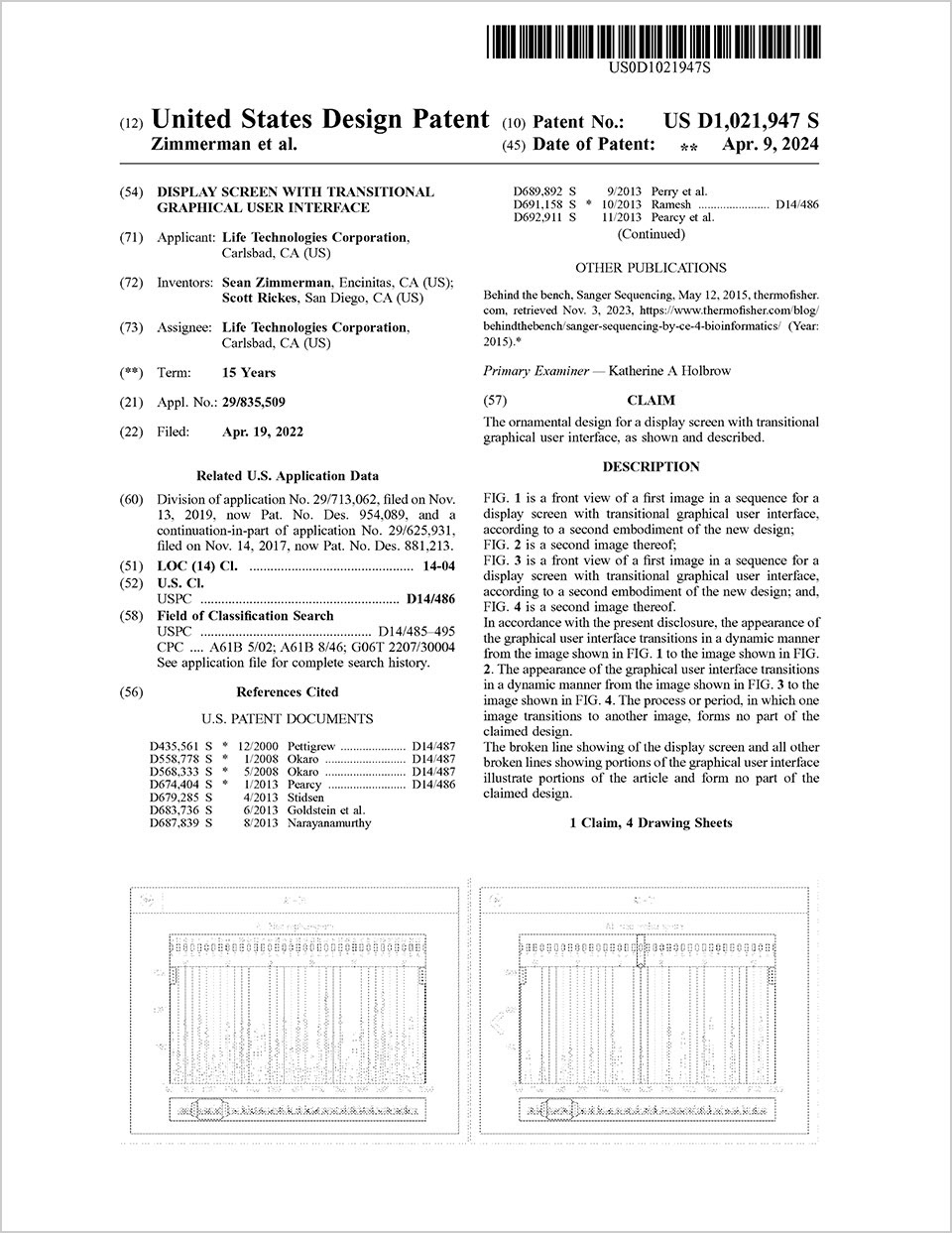
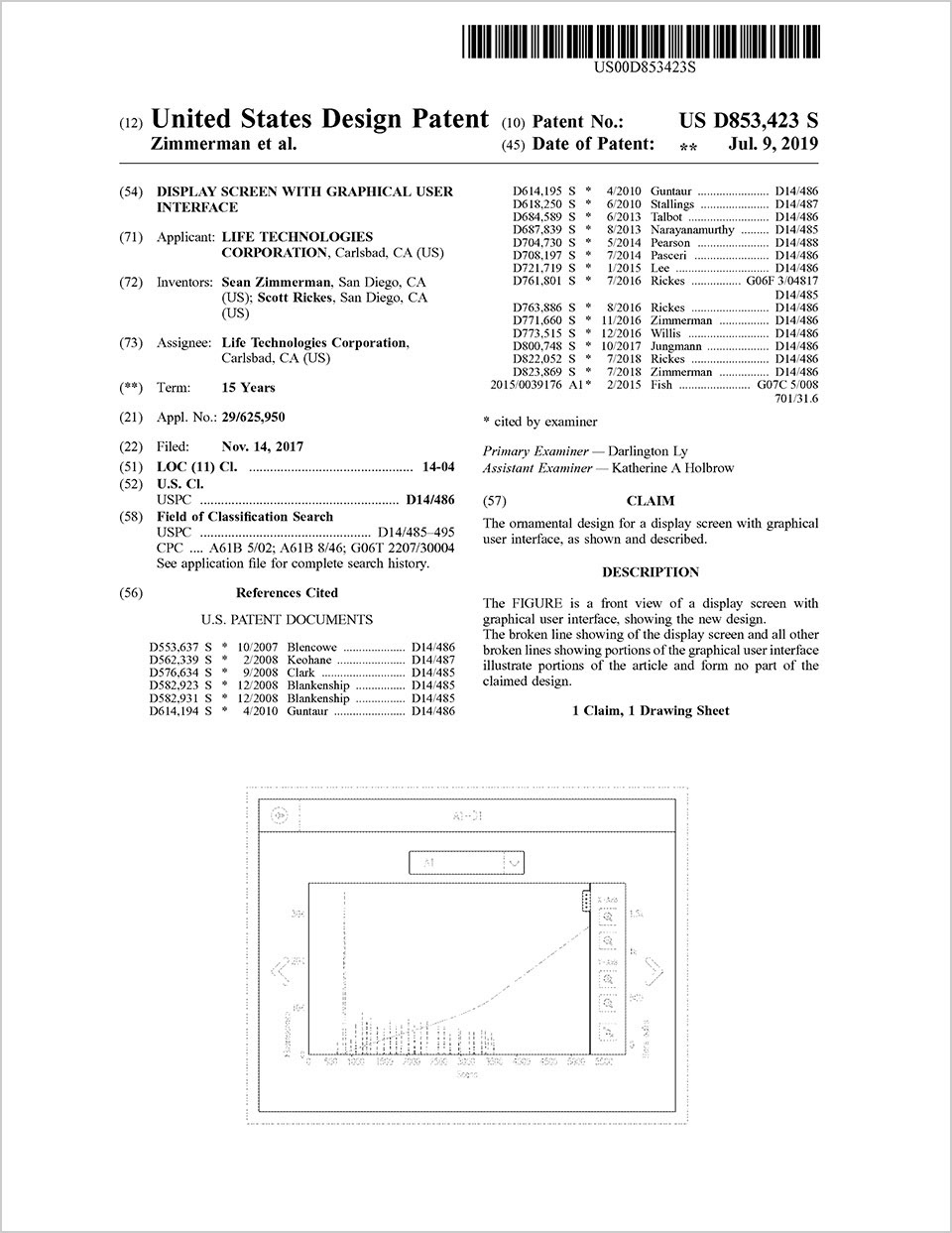
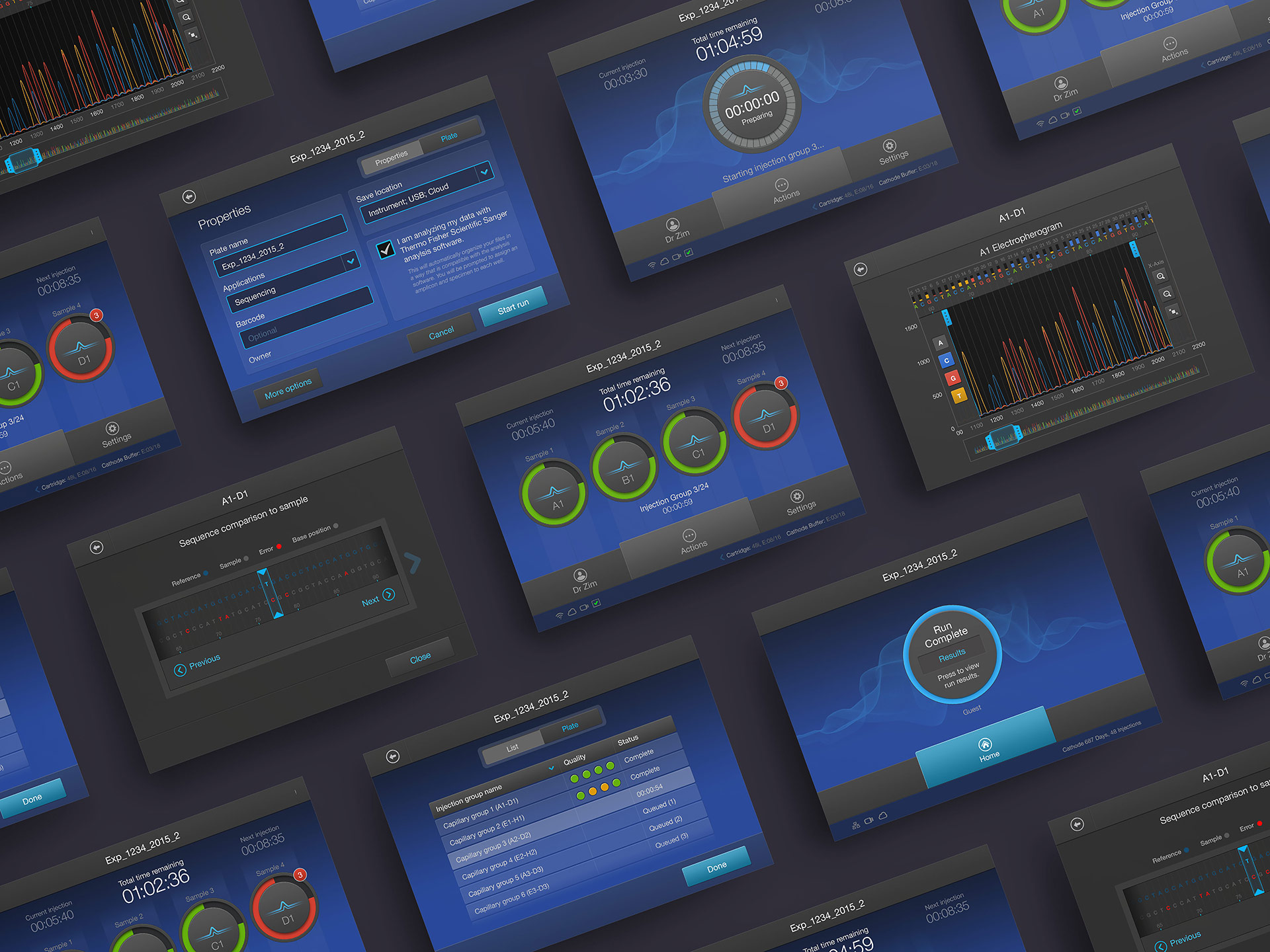
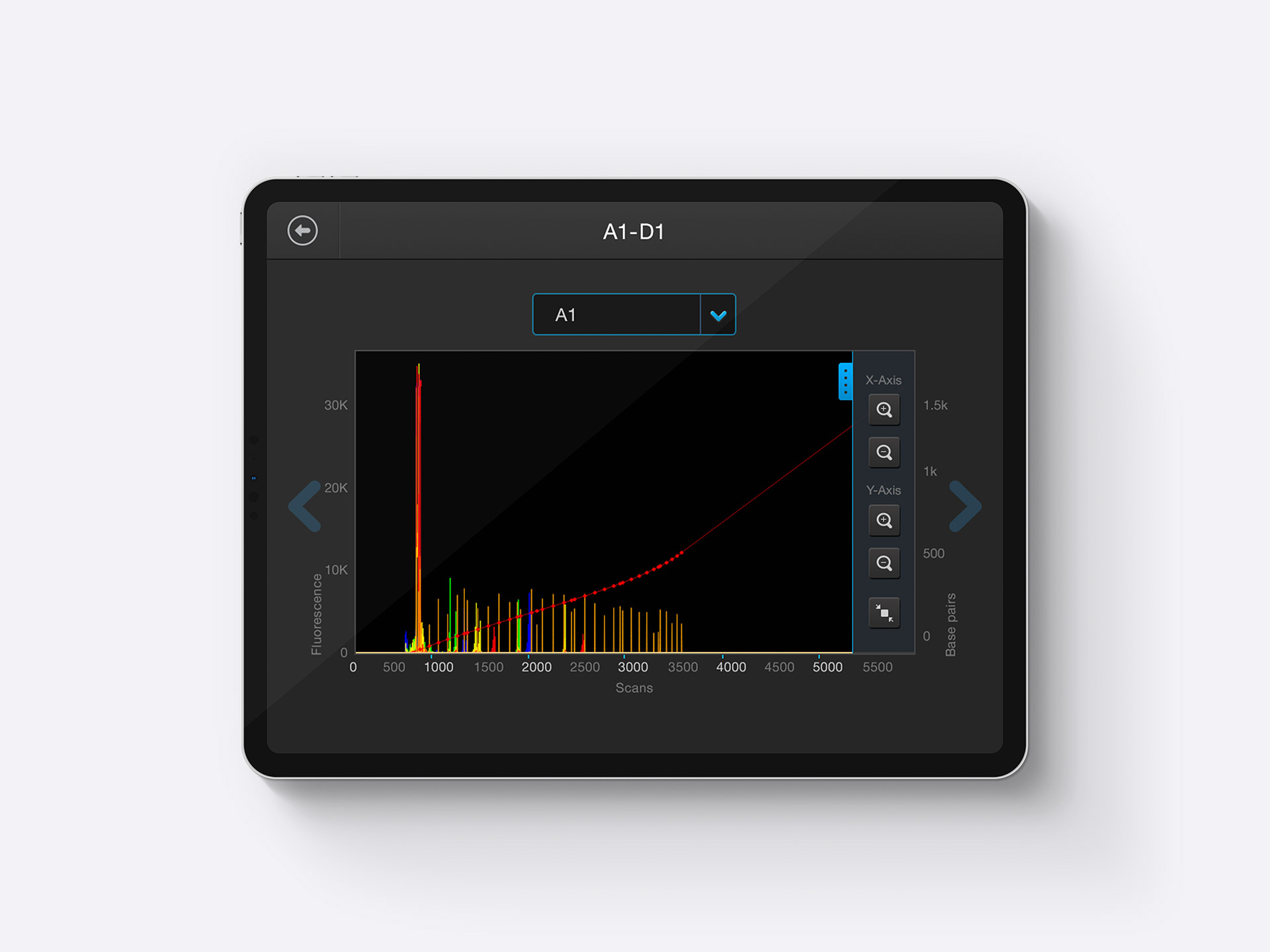
Data Visualizations for Sequencing and Fragment/HID
Analysis
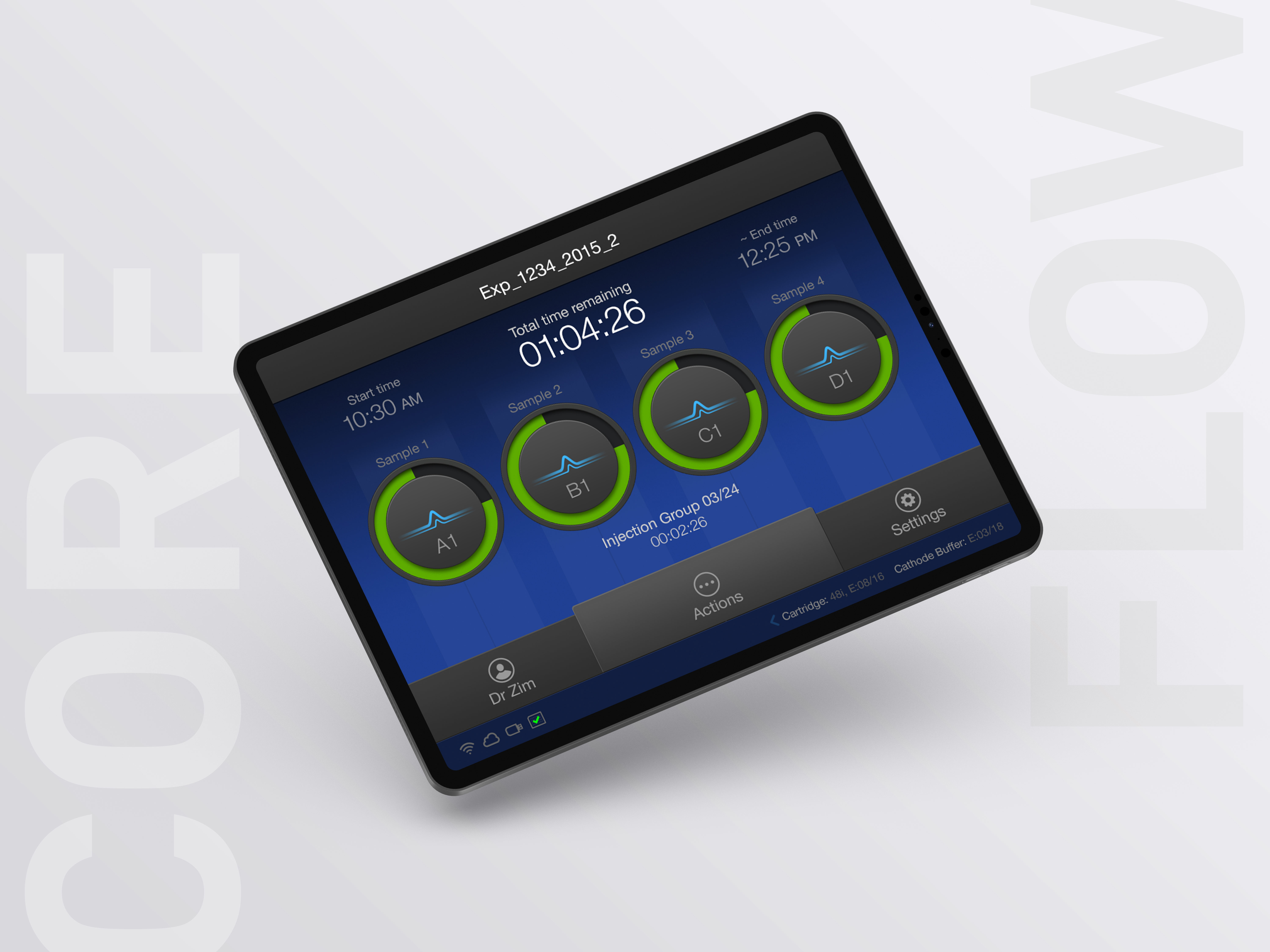
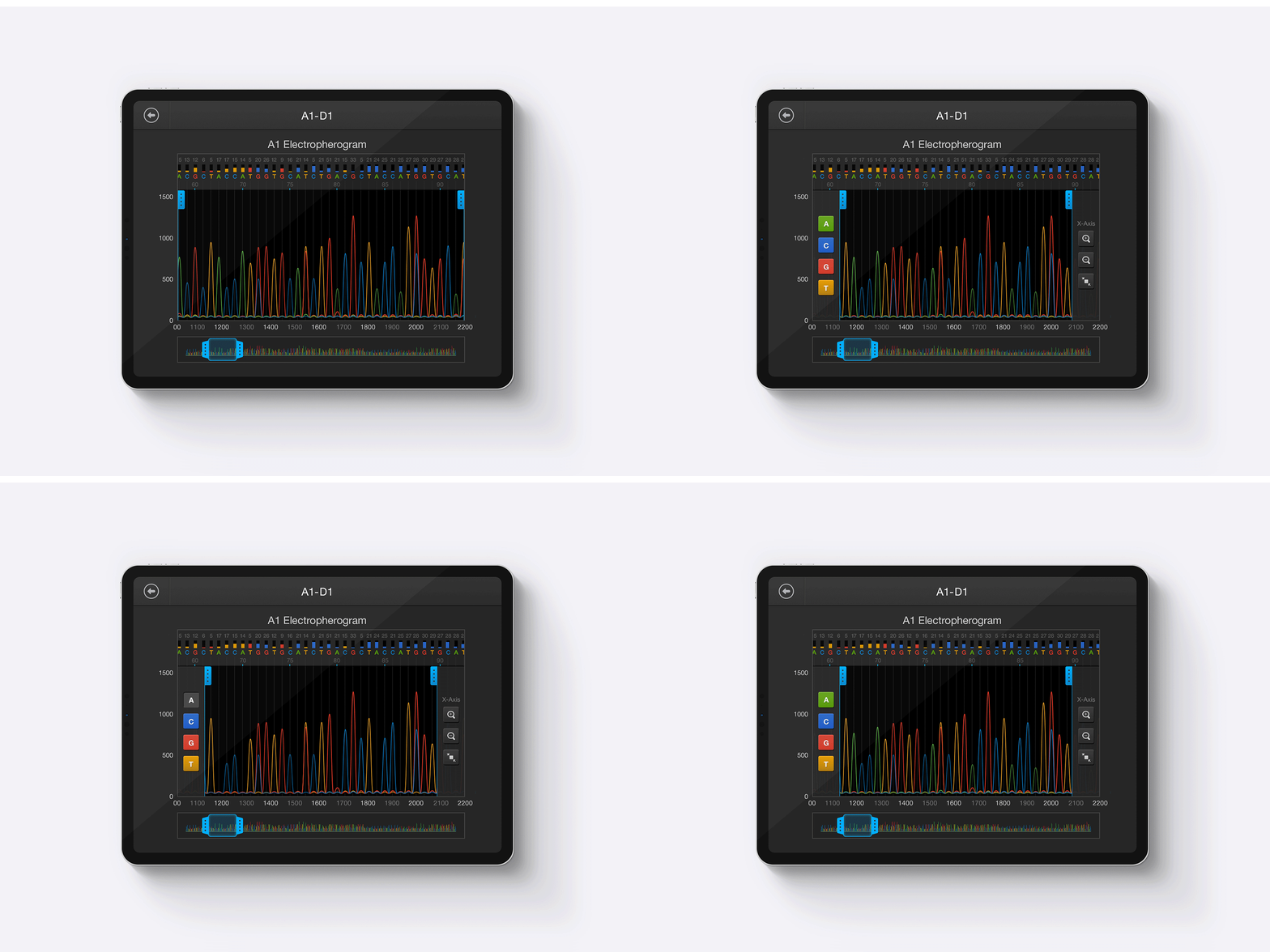
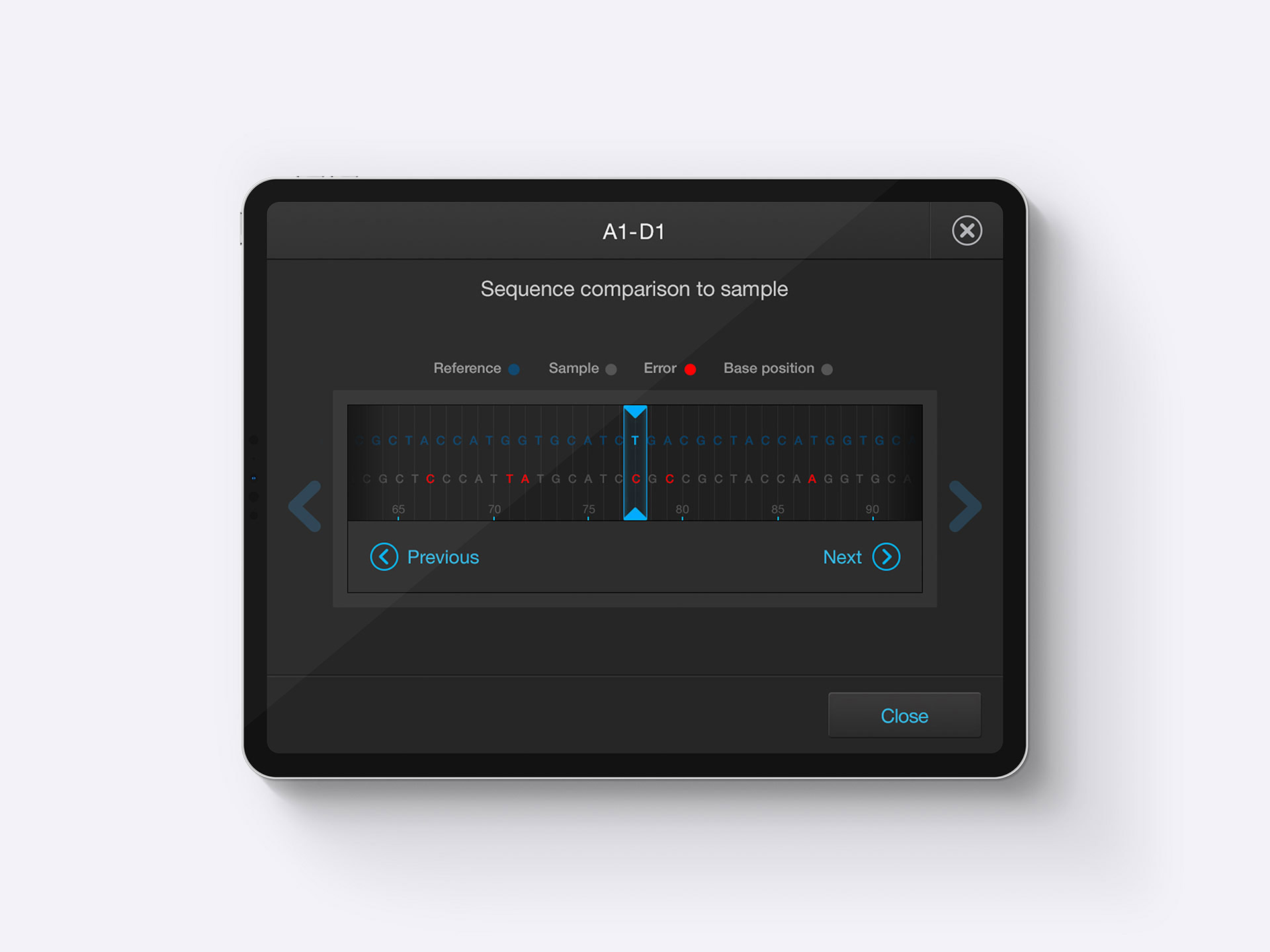
A crucial aspect of designing the screens for this
instrument involved comprehending the data that required processing and subsequently
visualizing it in a straightforward manner. In this segment, I will present a selection of
these designs. Notably, these designs have contributed to earning a patent.
Instrument Connect - Mobile
Application
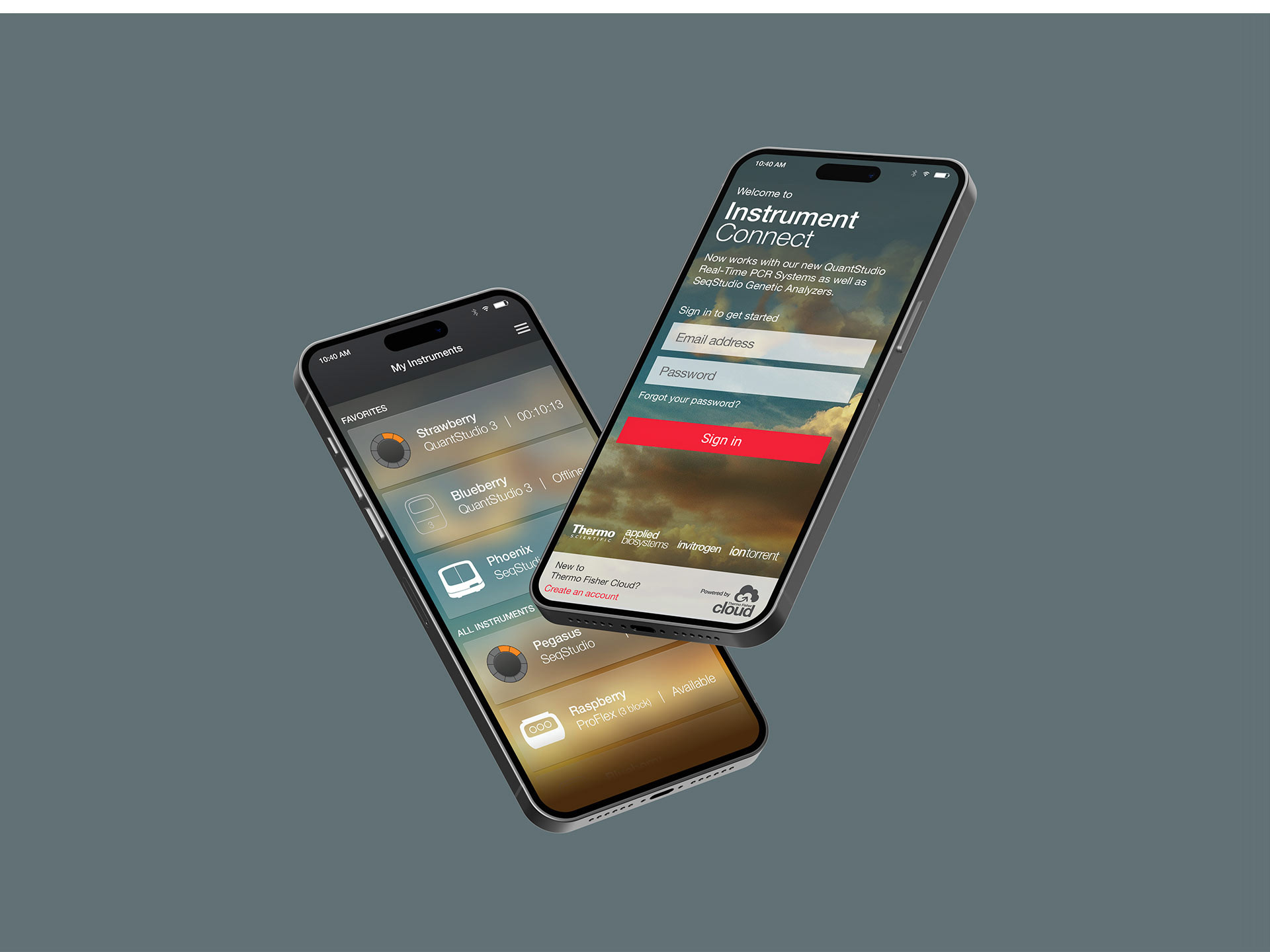
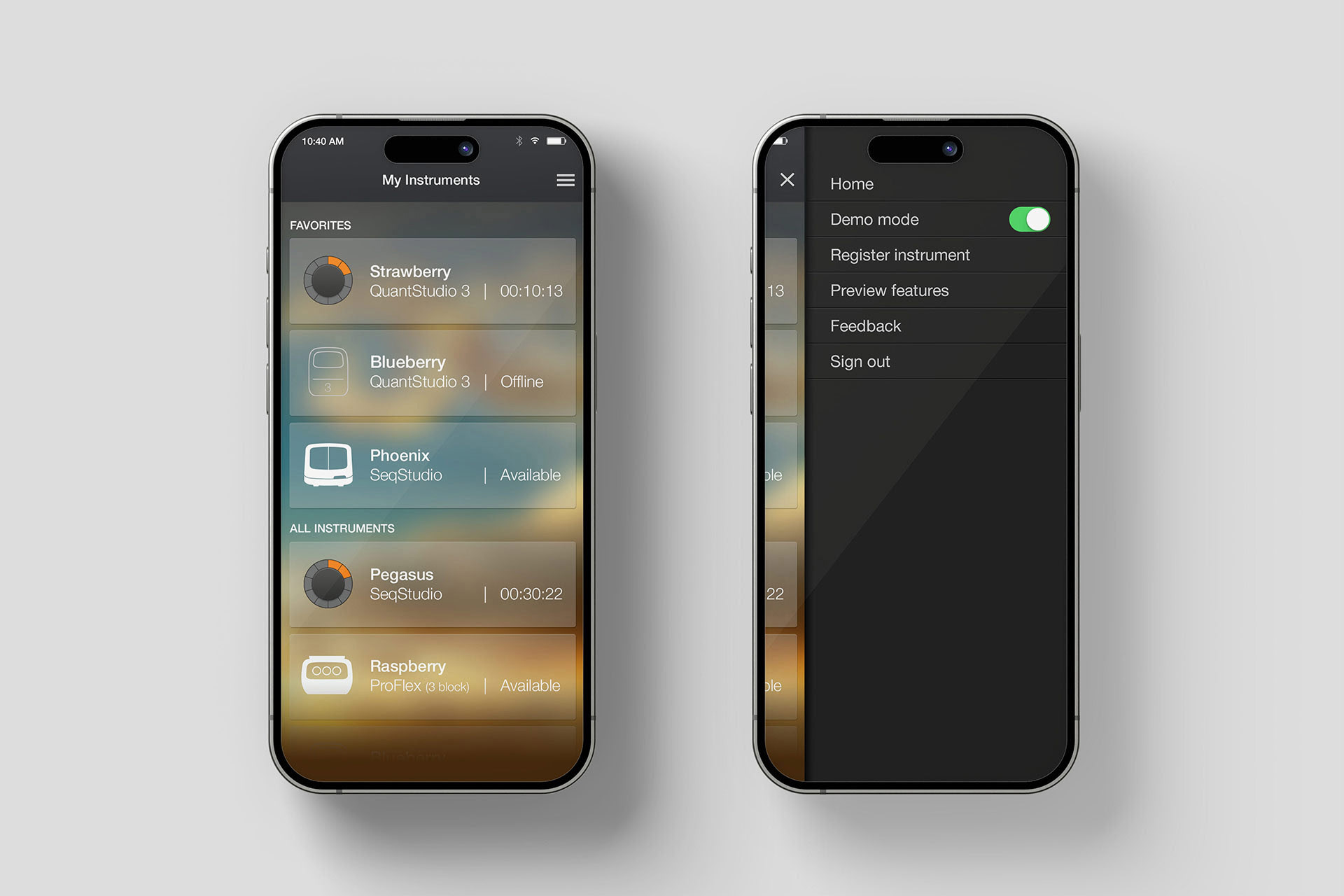
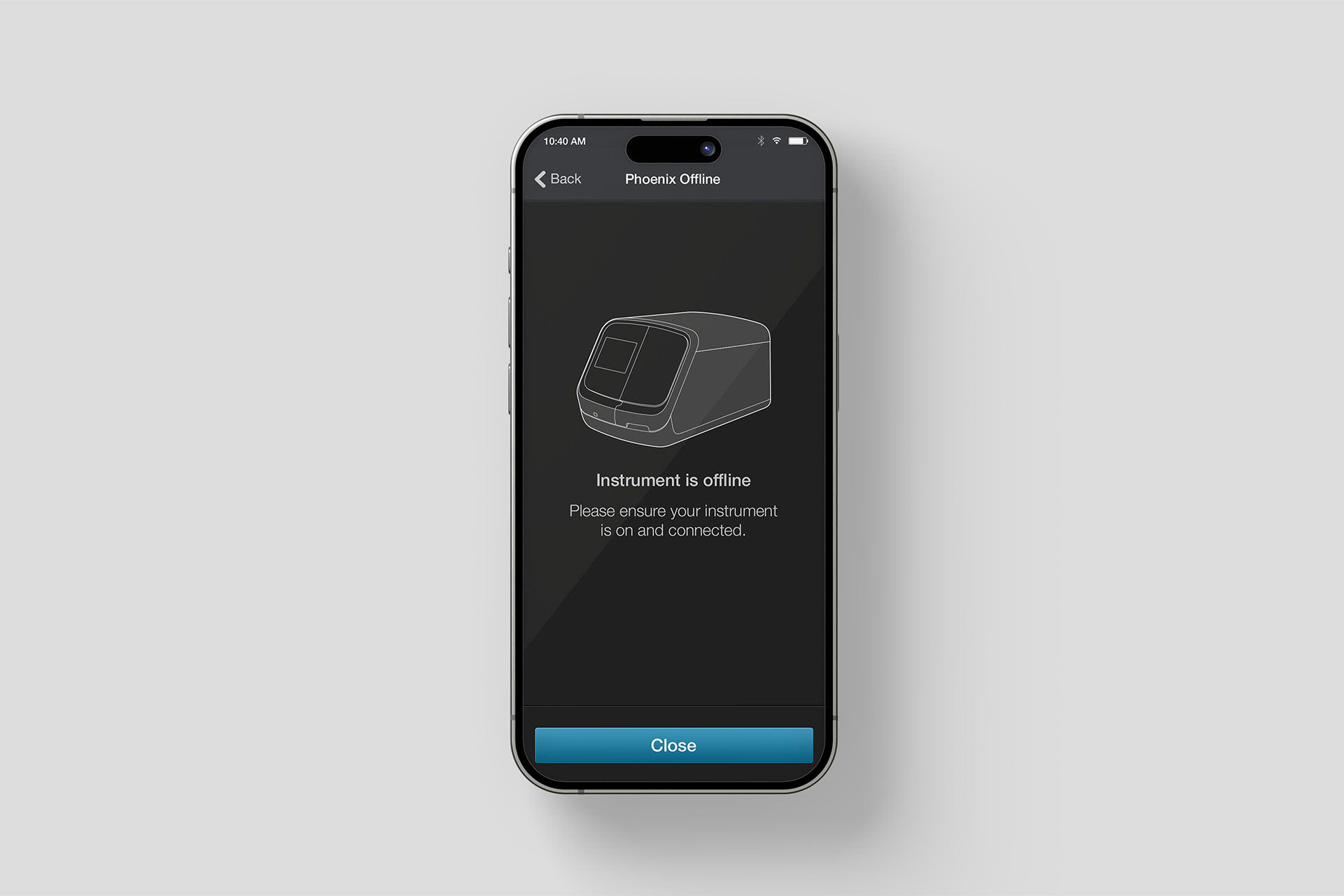
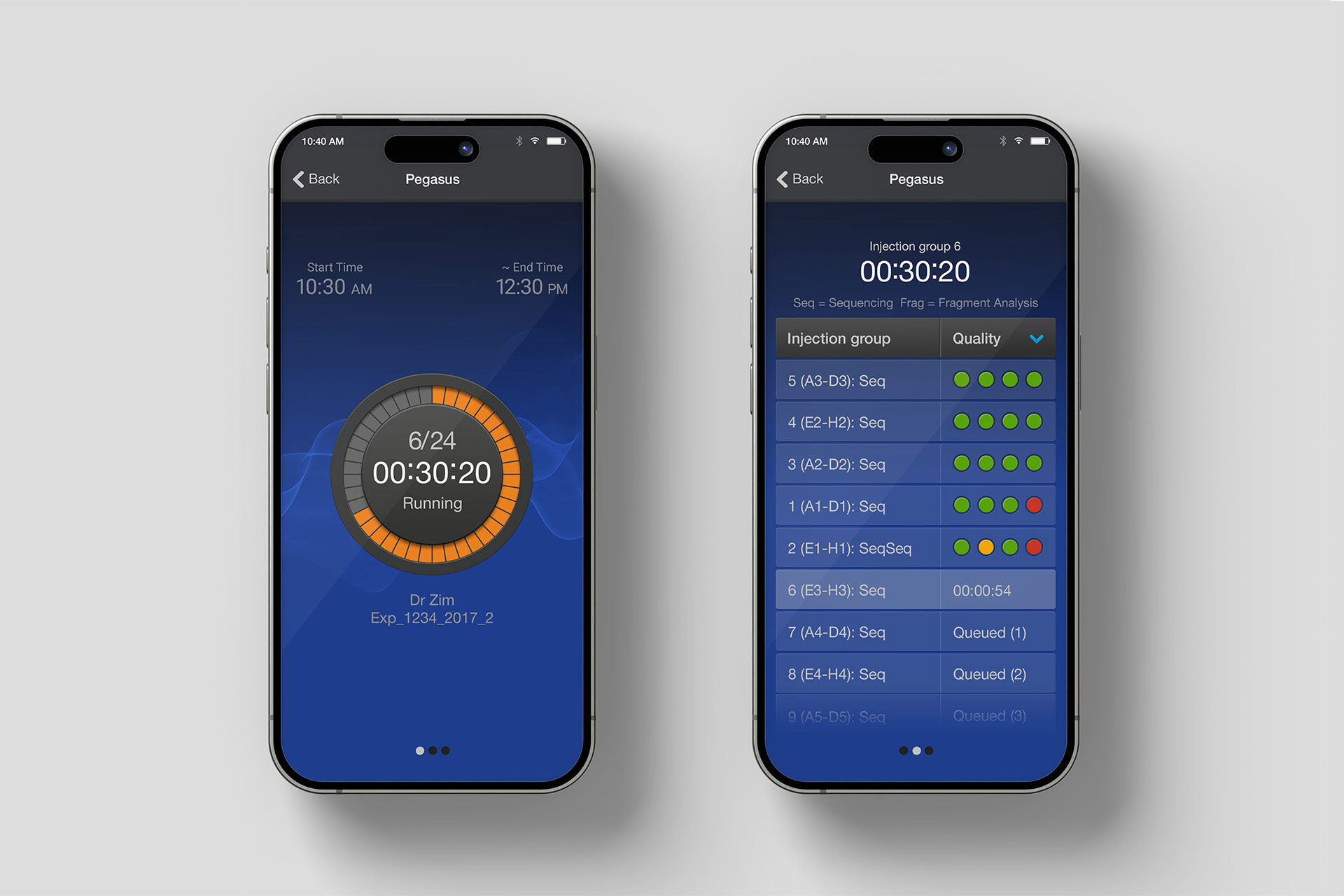
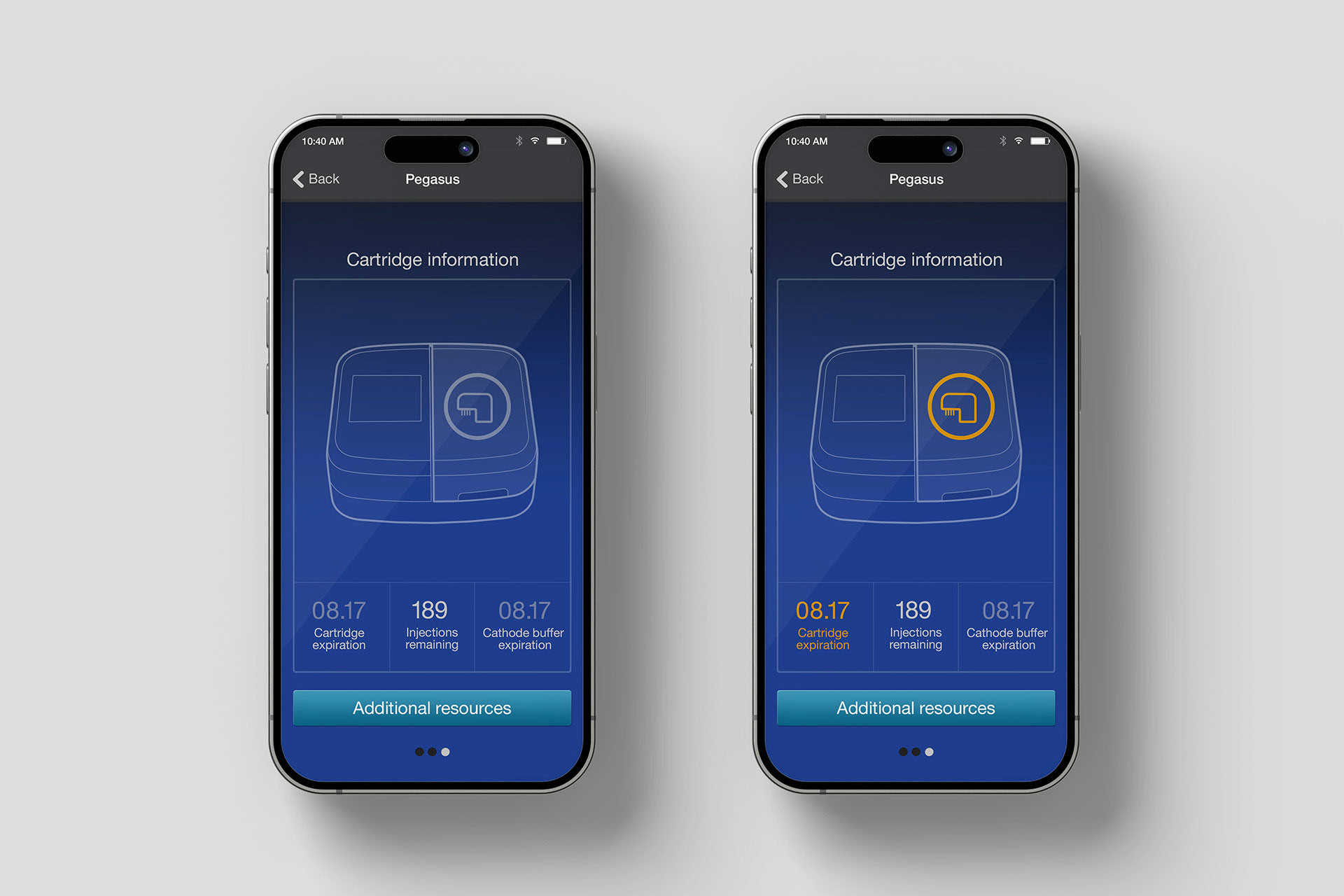
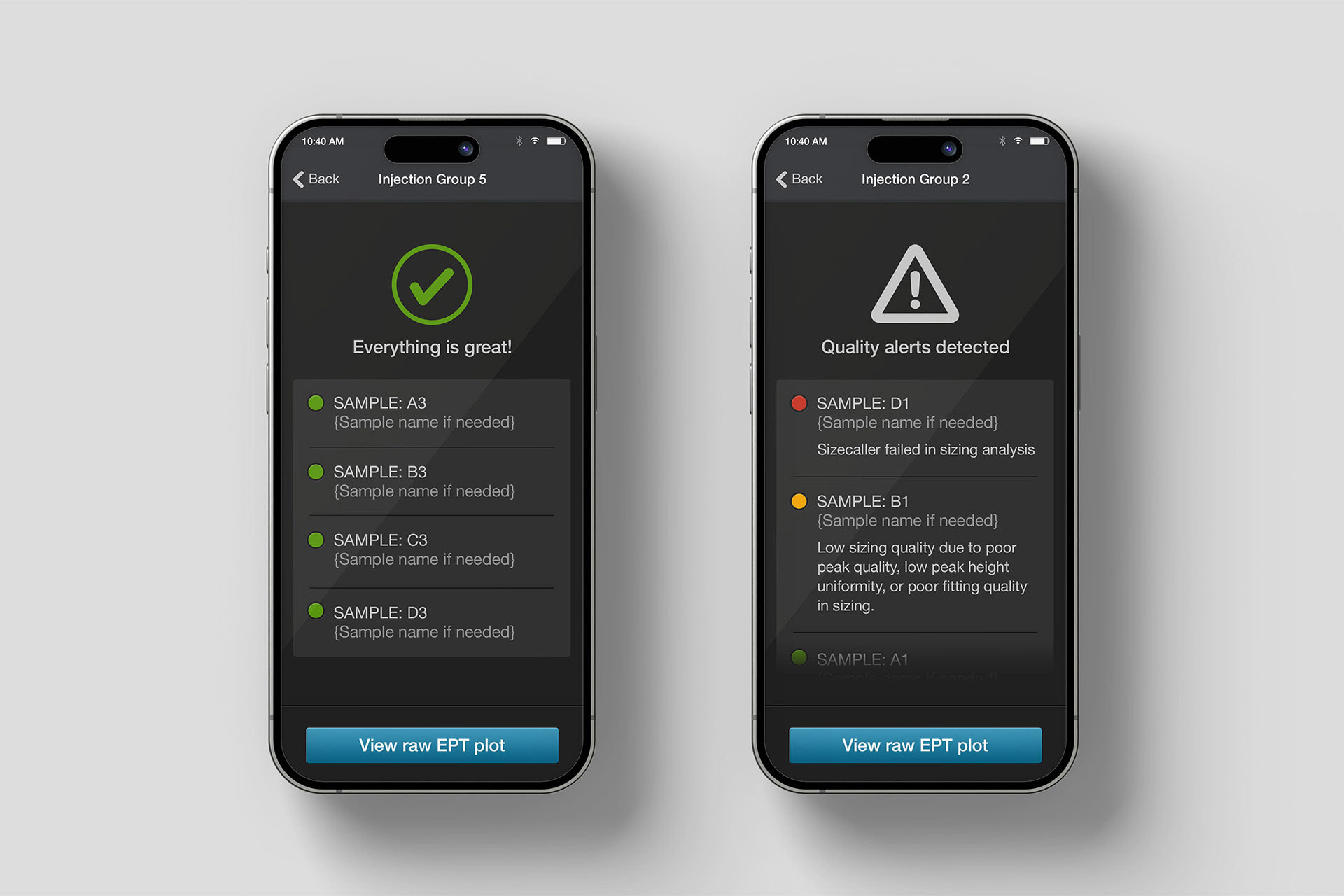
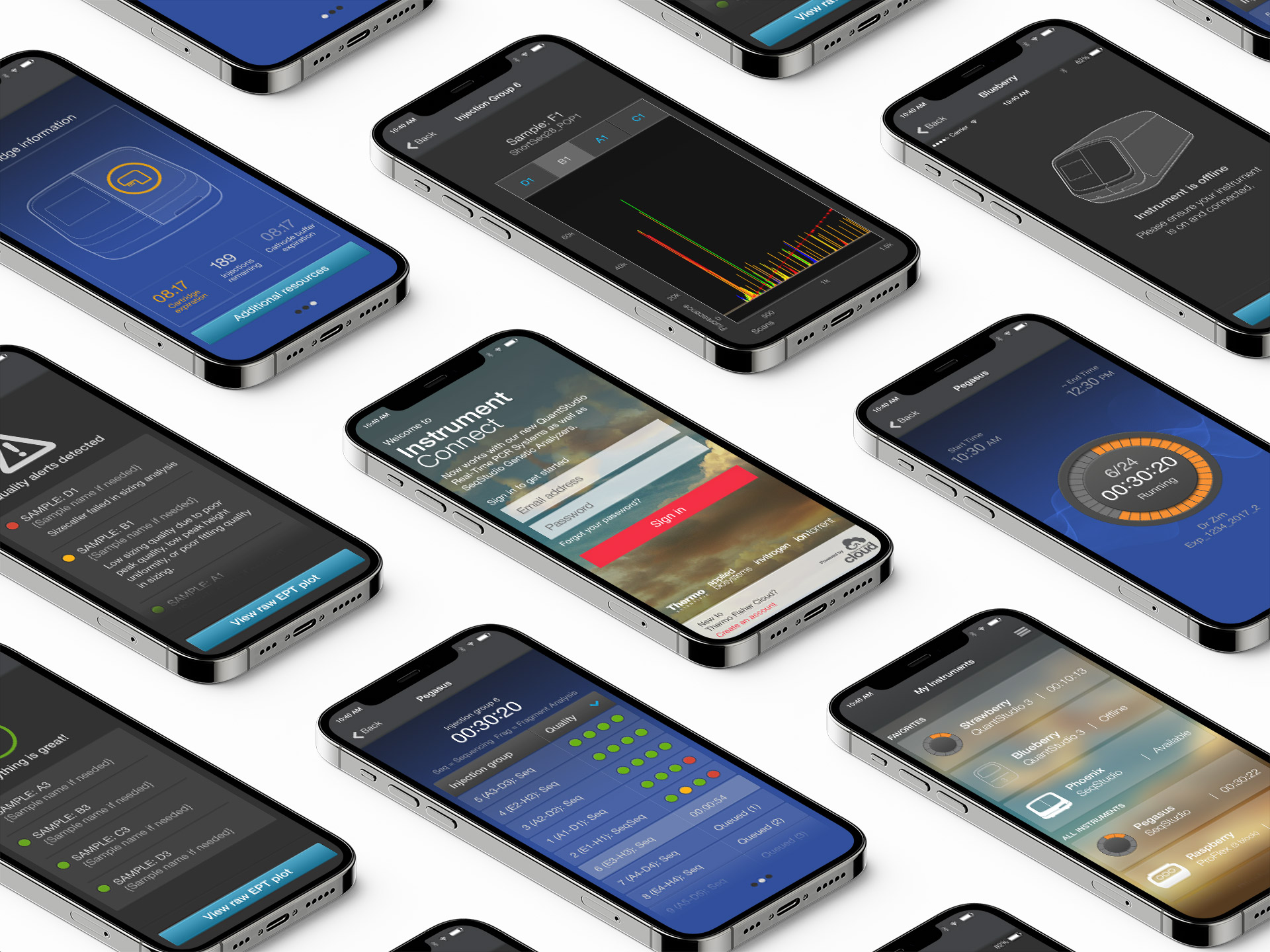
As previously mentioned, a key feature of the product
was its ability to upload information to the cloud. This feature enabled scientists to
monitor their experiments remotely. To facilitate this, we developed a mobile application
named 'Instrument Connect'. While designing this app, our primary focus was on fostering
collaboration and providing flexibility. I was responsible for both the User Experience
(UX) and User Interface (UI) designs for this project.
In January of 2020, scientists in Australia were
first to sequence the COVID virus's genome, using the SeqStudio Genetic Analyzer. This
sequence provided the roadmap to creating the diagnostic test, that most of us are
familiar with, today.